

The worst part of a hot shower is not the heat, it is the steam. When municipal water hits 100 degrees Fahrenheit, the chlorine in it volatilises and you breathe it for ten minutes while warm water opens your pores. You are absorbing chlorine through your skin and your airways at the same time, which is why bleached hair fades faster in summer and why eczema-prone skin flares after a few weeks of hot showers.
Finding the best shower filters for chlorine removal is less about brand names and more about the media inside the cartridge. KDF-55 copper-zinc media, calcium sulfite, activated carbon and vitamin C all work, but they behave very differently in hot water at low flow rates. We compared ten of the most-reviewed filters on the market, weighed the certification claims, and read what owners actually reported after months of daily use.
Here is the short answer before the detail: the best shower filter for chlorine is a multi-stage inline unit with KDF-55 as the primary working media, a sediment pre-screen, and a replaceable cartridge with a stated gallon capacity. A filter that also carries an NSF/ANSI 177 listing gives you independent verification rather than a manufacturer claim. If your water is chloraminated rather than chlorinated, you need vitamin C media in the stack, and no carbon-only filter will do the job.
One note before we start: nothing on this list softens water. If your shower is scaling, that is a hardness problem and a shower filter will not fix it. We explain the difference in our bathroom safety and accessibility guide context too, but the short version is that hardness and chlorine are separate contaminants handled by separate media.
Table of Contents
- Top 3 Picks: Best Shower Filters For Chlorine Removal (October 2026)
- Best Shower Filters for Chlorine Removal Compared in 2026
- 1. Aquabliss SF100 Inline Shower Filter – The Most Reviewed Inline Pick
- 2. SR SUN RISE Filtered Handheld Shower Head – Chlorine Treatment With a New Head
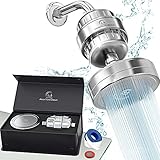
- 3. AquaHomeGroup 20+3 Stage Filtered Shower Head – The Deepest Media Stack
- 4. FEELSO 15-Stage Filtered Shower Head – The Highest Rated in the Group
- 5. bwdm 15-Stage Vitamin C Shower Filter – The Slimmest Inline Option
- 6. PHILIPS NSF KDF Inline Shower Filter – The Longest Stated Cartridge Life
- 7. Veken One-Press Shower Filter – The Easiest Cartridge Change
- 8. HOPOPRO 18-Stage Shower Filter – The Most Flexible Fit
- 9. MakeFit Filtered Shower Head – The Best Answer to Low Pressure
- 10. AQUAYOUTH 2.0 Carbon Shower Filter – The Independently Certified Pick
- How Shower Filters Remove Chlorine
- Chlorine vs Chloramine and How to Check Your Utility
- What to Consider Before Buying a Shower Filter
- Do Shower Filters Really Remove Chlorine?
- Frequently Asked Questions
- What is the best chlorine removal filter for a shower?
- Do shower filters actually remove chlorine?
- How do I remove chlorine from my shower?
- Do shower filters remove chloramine?
- Do dermatologists recommend shower filters?
- What are the downsides of using shower filters?
- How do I know if my water is chlorinated or chloraminated?
- How often should I replace a shower filter cartridge?
- The Bottom Line on Chlorine Removal Filters in 2026
Top 3 Picks: Best Shower Filters For Chlorine Removal (October 2026)

Aquabliss SF100 Shower Filter
- Inline 1/2 inch fit
- 6 month Easy Swap cartridges
- Tool-free install in 2 minutes

FEELSO 15-Stage Filtered Head
- 15-stage media stack
- 5 spray modes
- Removes chlorine and heavy metals

SR SUN RISE Filtered Handheld
- KDF and vitamin C ball media
- 8 sprays plus Power Wash
- 71 inch hose at 1.75 GPM
Best Shower Filters for Chlorine Removal Compared in 2026
All ten filters below reduce free available chlorine. They differ in how much media sits in the path, whether the media is a real reductant or an inert filler, how long the cartridge lasts, and how independently the claims were tested.
| Product | Specs | Action |
|---|---|---|
| Aquabliss SF100 Inline Shower Filter |
|
Check Latest Price |
| SR SUN RISE Filtered Handheld Shower Head |
|
Check Latest Price |
 AquaHomeGroup 20+3 Stage Filtered Shower Head AquaHomeGroup 20+3 Stage Filtered Shower Head |
|
Check Latest Price |
| FEELSO 15-Stage Filtered Shower Head |
|
Check Latest Price |
 bwdm 15-Stage Vitamin C Shower Filter bwdm 15-Stage Vitamin C Shower Filter |
|
Check Latest Price |
 PHILIPS NSF KDF Inline Shower Filter PHILIPS NSF KDF Inline Shower Filter |
|
Check Latest Price |
 Veken One-Press Shower Filter Veken One-Press Shower Filter |
|
Check Latest Price |
 HOPOPRO 18-Stage Shower Filter HOPOPRO 18-Stage Shower Filter |
|
Check Latest Price |
 MakeFit Filtered Shower Head MakeFit Filtered Shower Head |
|
Check Latest Price |
 AQUAYOUTH 2.0 Carbon Shower Filter AQUAYOUTH 2.0 Carbon Shower Filter |
|
Check Latest Price |
1. Aquabliss SF100 Inline Shower Filter – The Most Reviewed Inline Pick
Aquabliss SF100 Daily Revitalize Shower Filter – Chrome
Inline filter for 1/2 inch arms
Reduces chlorine and odors
6 month cartridges
Pros
- Largest review base in the group with softer hair and less dry skin reported
- Tool-free install in under two minutes
- Fits fixed and rain and handheld and combo heads
- Does not noticeably cut water pressure
Cons
- Included mesh strainer washer is confusing and poorly explained
- Plastic threading can crack if over-tightened
- Cartridge needs replacing every few months to hold performance
With more than 69,000 ratings behind it, the Aquabliss SF100 is the filter most buyers in this category end up owning, and the reports from owners are unusually consistent. The recurring theme is softer hair and less tight skin within the first few showers, especially in hard-water homes where the scale film also seems to clear faster.
Installation is genuinely a two-minute job. It screws between the shower arm and the head on a standard 1/2 inch connection, and the box includes thread seal tape, spare washers and the SFC100 cartridge. The cartridge fits either direction, which removes the most common install mistake people make with inline filters.
The body is ceramic, polypropylene and stainless steel at 3.3 by 3.3 by 4.7 inches, which keeps it compact enough for tight installations. The filter is positioned to reduce chlorine, pesticides, pharmaceuticals, odors and scale buildup, and owners confirm the chlorine smell in the steam fades noticeably once the media is fresh.
Pressure loss is the complaint that comes up most, and it is not a universal one. A large share of owners report no measurable drop at all, while others with low incoming pressure notice a difference. The cartridge is rated for roughly six months, so the honest cost of ownership is two cartridges a year plus the initial unit.
What you should check before buying
Decide whether you want to keep your existing shower head. This unit works with fixed, rain, handheld, dual and combo heads, but if you plan to upgrade the head within a year you are buying a cartridge you will outgrow.
Count the drop in height. At 4.7 inches tall, this filter pushes the head down by roughly that amount, which matters if you are tall or if your arm is fixed high on the wall. Taping the thread too aggressively is also the main cause of the cracked plastic threads owners report, so hand-tight plus a quarter turn is the right approach.
Where it falls short
This is a chlorine and odor filter, not a certified contaminant-removal device. It has no NSF/ANSI 177 listing, so the chlorine reduction figure is a manufacturer claim rather than an independently verified one, and there is no vitamin C stage for chloraminated water.
It also does nothing for hardness, which is the single biggest source of buyer disappointment in this category. If your main complaint is white crust on the glass and low flow after months of use, an ion exchange softener or a whole-house solution will solve it and this filter will not.
2. SR SUN RISE Filtered Handheld Shower Head – Chlorine Treatment With a New Head
SR SUN RISE Filtered Shower Head with Handheld High Pressure 9 Spray Mode Showerhead Detachable Shower Head Water Softener Filters Beads for Hard Water Remove Chlorine 1 Filter Bright Silver
Detachable handheld filtered head
KDF and vitamin C ball media
8 sprays at 1.75 GPM
Pros
- Combines filtration and a strong spray in one detachable head
- KDF plus vitamin C ball media gives you a chloramine option
- Soft silicone nozzles make mineral buildup easy to wipe off
- 71 inch hose gives good reach for rinsing
Cons
- Lightweight ABS construction feels less solid than metal handheld heads
- Replacement bead cartridges are an added recurring cost
If your old shower head is the problem rather than your water, this is the efficient choice. You get filtration and a full replacement handheld head in one purchase, and the filter media is a genuine multi-part stack: KDF, maifan stone and vitamin C balls, all in a replaceable cartridge.
Eight spray settings plus a Power Wash mode cover most household preferences, and the air-boost style design delivers a stronger spray than the 1.75 GPM flow rate would suggest. Owners frequently mention that the spray feels stronger than their previous fixed head, which is the opposite of what people expect when a filter is added.
The 71-inch stainless hose is long enough to rinse a wall or clean a shower floor without craning, and the universal G1/2 inch connection means it will fit most standard arms. Soft silicone nozzles are a genuinely useful detail in hard water because scale sits on them and wipes off rather than hardening inside the spray holes.
The honest drawback is build quality. At 450 grams in ABS, this is a plastic handheld head, and owners comparing it against a metal one notice the difference immediately. The bigger ongoing cost is the replacement bead cartridges, which are sold separately and needed on a regular schedule.
Who this suits best
It suits anyone whose handheld head is due for replacement anyway, since you are buying a head regardless. It also suits renters who want filtration with a tool-free, reversible install and no permanent plumbing changes.
For swimmers, the KDF and vitamin C combination is the reason to pick this one. Post-swim showers with residual pool chlorine are a different problem from tap chlorination, and having both a reductant and vitamin C in the path gives you more coverage than a carbon-only cartridge.
What to watch out for
Eight spray modes on a plastic head is a lot of moving internal parts, and the flip side of a detachable design is that the filter can be left off if the head is swapped for a bare one. Set a calendar reminder, because a detached head defeats the cartridge entirely.
Also expect to keep spare bead cartridges on hand. The beads deplete faster than a KDF bed does, and a shower that runs without media for a week can give you a misleading impression that the filter does not work.
3. AquaHomeGroup 20+3 Stage Filtered Shower Head – The Deepest Media Stack
AquaHomeGroup Filtered Shower Head, 20+3 Stage, Reduces Chlorine, Chrome
20+3 stage metal filtered head
KDF with vitamins C and E and A
90%+ chlorine reduction
Pros
- Deepest filtration stack with KDF and a vitamin infusion
- Brass wall holder resists slipping under a heavy head
- Replacement cartridges and stainless hose in the box
- Spa-like water feel with less skin tightness
Cons
- Heavier and bulkier than inline-only filters
- Highest price among the filtered shower heads here
This is the one to look at if your instinct is that more stages means more removal. The AquaHomeGroup stacks 20+3 filtration layers, with KDF handling the chlorine reduction and an infusion of vitamins C, E and A targeting residual chlorine and chloramine, which is a media combination you rarely see outside this price bracket.
Owners describe the water as tasting and smelling clean within a few showers, and the softer water feel shows up in hair and skin reports. The 90%+ chlorine reduction figure comes from the manufacturer rather than an independent lab, so treat it as a design claim rather than a measured result.
What sets it apart mechanically is the reinforced brass holder. Most filtered shower heads hang off plastic and slowly droop or spin, and this one resists that. The 59-inch stainless hose and replacement cartridges in the box mean you are not immediately ordering a spare.
That mass is also the main drawback. At 4.5 inches square with a wall-mounted assembly, it is a bigger object than an inline filter, and owners in smaller stalls report it feels crowded. A 2.5 GPM flow rate is generous for a filtered head.
What to check before you order
Measure the clearance above your shower arm. This is a wall-mounted unit with a hand shower, not a slim inline canister, so the vertical drop is larger than the spec sheet dimensions suggest once the head is angled down.
Confirm that your existing handheld hose is compatible or plan to use the included one. Mixing a hand shower from one brand with the filtered holder and hose from another is where most installation complaints come from in this category.
Where it falls short
No independent certification. There is no NSF/ANSI 177 listing, so the chlorine number is a manufacturer claim, and the vitamin infusion is a bonus layer rather than a tested chloramine system.
It also does not address hardness despite what a water softener label implies. If your complaints are about scale, dry hands after rinsing and long showers, this will not change any of that and the bulk will feel like dead weight in a small bathroom.
4. FEELSO 15-Stage Filtered Shower Head – The Highest Rated in the Group
FEELSO Shower Head with Shower Filter, Filtered Shower Head for Hard Water
15-stage filter with shower head
Reduces chlorine and heavy metals
5 spray modes
Pros
- Holds a 4.6 star average across close to 14000 ratings
- 15-stage stack handles chlorine and heavy metals
- Five spray modes with an adjustable swivel joint
- Tool-free install with Teflon tape included
Cons
- Filter runs black for the first 5 to 10 minutes as carbon dust rinses out
- Fixed 4 inch head gives less coverage than a rain head
The FEELSO pairs a fixed 4-inch shower head with a 15-stage filter cartridge, and it holds the highest average rating of anything we looked at. The chlorine and odor reduction reports are the strongest part of the feedback, with a large share of buyers describing the smell disappearing entirely after the first few showers.
The heavy metal side of the claim covers lead, mercury, nickel and chromium, and this is one of the few filters in the group where that claim is repeated consistently enough to be worth taking seriously. Skin and hair softness follow within about a week for most owners.
Five spray modes give you rain, massage, mist and two combinations, and the swivel ball joint lets you aim it without loosening anything. At 1.8 gallons per minute the flow is moderate, which is a reasonable trade for filtration in a chrome-plated ABS body weighing 450 grams.
There is one step people skip. The filter runs black for the first five to ten minutes as carbon dust rinses out, and owners who flushed it first report a much better first impression. Do that before you judge it.
What to check before buying
Coverage, not pressure. A 4-inch fixed head sprays a narrower pattern than a rain head, and if you are replacing a larger head you will notice. Spray variety does not make up for footprint, so check your wall clearance.
Also check whether you want a fixed head at all. This is not convertible to handheld, so if you shampoo at the sink or wash a dog in the tub, you are losing the flexibility your current setup may give you.
Who should pass on it
If your water is chloraminated, a stage-heavy carbon and mineral stack is the wrong tool. Carbon underperforms on monochloramine in the short contact times of a shower, and you need ascorbic acid media in the path instead.
Buyers expecting water softening will also be disappointed. Fifteen stages is a marketing number as much as a technical one, and the stages that address hardness do not lower it measurably at shower flow rates.
5. bwdm 15-Stage Vitamin C Shower Filter – The Slimmest Inline Option
15 Stage Shower Filter – Shower Head Filter – bwdm Hard Water Filter, Remove Chlorine Heavy Metals and other Impurities, Vitamin C Water Softener Reduces Dry Itchy Skin, Dandruff (Chrome)
15-stage vitamin C inline filter
Reduces chlorine, metals and sediment
2.5 gpm flow
Slim tool-free universal fit
Pros
- Lowest cost inline filter here with consistent reports of softer hair and less itching
- Maintains water pressure in normal use
- Open housing makes cartridge swaps straightforward
- Slim 2.7 by 2.4 inch cartridge fits tight installs
Cons
- Thread plastics can crack if over-tightened
- Adds roughly 4 inches of drop
- Can need backwashing more often with heavy sediment
The bwdm is the value entry point in this group and it covers the basics well. Hard-water and well-water households report less itching and noticeably softer hair within days, and the cartridge is a 15-stage vitamin C stack that also targets sediment and metals.
What makes it genuinely useful is the open housing. You can see the media instead of guessing, and swapping a refill is a straightforward job rather than the awkward process you get with sealed inline filters. The 2.5 gpm flow rate keeps pressure complaints rare.
At 2.7 by 2.4 inches it is the smallest cartridge here, which matters in a tight alcove shower where a 4.7-inch body would hit the wall. It is a universal screw-in fit for wall-mounted, handheld, rainfall and combo heads.
The compromises are physical. The plastic at the shower head thread can crack if you overtighten it, and the body adds about four inches of vertical drop, which tall users sometimes compensate for with a riser.
What to check before buying
Your height under the shower head. Four inches of extra drop is nothing for a shorter household and a real problem for a tall one standing at the same head position, especially in a low-ceilinged stall.
Check your sediment load too. If you are on well water or have visible grit in the shower, this unit will need backwashing more often and you should plan on keeping spare cartridges rather than ordering one at a time.
Where it falls short
There is no independent certification behind the chlorine claim, and the vitamin C media depletes faster than a KDF bed, so the real cost of ownership depends on how disciplined you are about refills.
It also does not fix hardness or total dissolved solids. Buyers who bought it expecting a softener come back disappointed, and the first few showers can run a visible carbon-black flush that looks alarming if you were not expecting it.
6. PHILIPS NSF KDF Inline Shower Filter – The Longest Stated Cartridge Life
PHILIPS Shower Filter, Reduces Chlorine & Heavy Metals, AWP1775CH/37
3-stage filtration with NSF KDF
Double mesh sediment screen
50,000 liter cartridge capacity
Tool-free 1/2 inch install
Pros
- Only widely recognised brand here with NSF-certified KDF media
- 50000 liter cartridge capacity stretches replacement intervals
- Tool-free install in about two minutes
- Metal body with chrome finish suits any bathroom
Cons
- Does not reduce TDS
- Chunky inline body limits shower head angle adjustment
- Some units arrive with the cartridge stuck in the casing
What separates the PHILIPS AWP1775CH from the crowd is provenance. The KDF media is NSF-certified, the brand is one people recognise from other appliances, and the chlorine reduction is not a marketing number pulled from a competitor’s spec sheet.
The other standout number is capacity. Each filter treats 50,000 liters, roughly 13,208 gallons, which the manufacturer puts at about four to six months of daily showers. That is a longer stated interval than most inline cartridges in this group, and it makes the ongoing cost lower.
The construction is a three-stage stack with a double mesh that traps rust, sand and visible debris before the media. The metal body with a chrome finish suits a bathroom better than bare plastic, and installation is tool-free on most standard 1/2-inch threaded showers.
What it will not do is reduce total dissolved solids, and the manufacturer says so plainly. Owners who tested with a TDS meter saw no change, which is correct behaviour for a chlorine filter but a common source of low ratings from buyers who expected a water quality upgrade.
What to check before buying
Head clearance and angle range. At 2.4 inches wide and 6.85 inches tall, this is a chunky inline body, and owners report that it limits how far the shower head can be angled down. If you are installing under a low arm, measure first.
Also check for cartridge jamming. A recurring report is that the cartridge arrives stuck in the housing and needs coaxing out. It is a minor annoyance rather than a defect, but budget five minutes for the first change.
Where it falls short
The rating is the lowest in the group at 4.2, and the reasons are mechanical: the chunky body, a top connector that can slip under a heavier head, and unchanged TDS readings that disappoint buyers who expected more.
There is also no vitamin C stage, so on a chloraminated supply this will disappoint. If your utility uses chloramine, the certified media here targets free available chlorine only and the residual smell will return within weeks.
7. Veken One-Press Shower Filter – The Easiest Cartridge Change
Veken Shower Filter, Chlorine, Lead & Sulphide Tested, One-Press Cartridge
One-press quick-change cartridge
Calcium sulfite, coconut carbon and KDF
Lab tested for lead and sulphide
Universal 1/2 inch connection
Pros
- One-press cartridge swap avoids removing the shower head
- Real media stack of calcium sulfite
- coconut shell carbon and KDF with no inert fillers
- Low profile extends the shower head less than a traditional filter
- Four-step install on a standard arm
Cons
- Short track record with only a few hundred ratings
- Suggested 3 month cartridge interval means frequent refills
- Can need extra tightening under heavier rain heads
The Veken solves the problem most owners hate, which is changing a cartridge. Instead of unscrewing the housing, you press a single mechanism and the spent cartridge releases. You do not have to take the shower head off, and owners who came from sealed inline filters describe it as the upgrade they did not know they needed.
The media is a genuine three-part stack of calcium sulfite, coconut shell carbon and KDF, with no non-filtering fillers listed. That last detail matters more than it sounds, because filler media is a common cost-saving trick that adds volume without adding treatment.
The U-shaped internal channel extends the water path so the media gets more contact time than a straight-through canister gives you. Contact time is the whole game with carbon, and a design that buys a few extra seconds per pass is a real improvement.
It is also lab tested for lead and sulphide reduction, and the low profile at 5.59 by 3.31 by 3.35 inches means it extends the shower head less than a traditional inline body. That matters in a low-clearance stall.
What to check before buying
Weight of your shower head. The recurring install issue is a large rain head needing more than hand-tightening, so expect to use the included Allen key and spare set screw. The extra hardware in the box covers this, but you will need it.
Check the refill interval against how you travel. A three-month cartridge means roughly four changes a year, so if you stay in short-term rental accommodation the ongoing cost adds up faster than a six-month cartridge would.
Where it falls short
This is the newest listing in the group with only a few hundred ratings, so the long-term durability record is not established yet. Buyers who like buying proven models will find less independent history to lean on.
There is also no NSF/ANSI 177 listing despite the lab testing language. A manufacturer lab test is not the same as independent certification, and there is no vitamin C stage, so chloraminated supplies are out of scope.
8. HOPOPRO 18-Stage Shower Filter – The Most Flexible Fit
HOPOPRO 18-Stage Shower Head Filter, NBC News Recommended Brand, High Output Universal Shower Water Filter Hard Water Filter Water Softener Showerhead Filter Remove Chlorine for Better Skin & Hair
18-stage inline filtration
Vitamin C media for dry skin
Universal 1/2 inch thread
1 year manufacturer warranty
Pros
- 18-stage media removes chlorine
- fluoride and sediment
- Cartridges reported to last 6 to 8 months per change
- Tool-free install on nearly any shower type or even a kitchen faucet
- Shower curtains stay white instead of staining orange
Cons
- Rare reports of skin itching after installation
- Filter runs black for the first several showers
- Top-heavy on cheap threads so extra Teflon tape is often needed
The HOPOPRO is the most flexible option here because the universal 1/2 inch thread means it is not tied to a specific head. Several owners mount the same unit on a kitchen faucet to treat drinking water, which is a use case almost nobody considers when shopping for a shower filter.
The 18-stage stack targets chlorine, fluoride, heavy metals and sediment, with vitamin C media in the path aimed at dry skin, eczema and dandruff. Hard- and well-water households report softer hair, less itching and fewer orange stains on the shower curtain.
Cartridge life is reported at six to eight months per change, which is at the longer end of what inline filters in this group deliver. A one-year manufacturer warranty comes with it, and spare parts are listed as available for six months after purchase.
One detail owners appreciate: the filtration runs black for the first several showers as loose carbon rinses through. Expect it, flush before the first real shower, and it is a non-issue.
What to check before buying
Your thread, honestly. This unit is top-heavy for its size and a few owners needed extra Teflon tape to stop it weeping at the shower head joint. If your arm threads are worn, budget for a wrap of tape before you fit it.
Also consider whether you are sensitive to any media in the stack. A small number of owners report itching or flaking after installation that resolved when the filter was removed, and with 18 layers there is more surface area in contact with your skin than a three-stage unit.
Who should skip it
If you have a known chlorine sensitivity and a history of reacting to new personal care products, install this one first in a secondary bathroom or on a utility sink first. That gives you a low-stakes test of the full media stack.
There is also no independent certification here, and the 18-stage count has been questioned in a review as marketing rather than a literal layer count. Judge the media list, not the number.
9. MakeFit Filtered Shower Head – The Best Answer to Low Pressure
MakeFit Filtered Shower Head – High Pressure Shower Head with Filter for Hard Water Softener – 7 Settings Bathroom Rain Showerhead to Remove Chlorine and Heavy Metals (Chrome)
KDF-55, calcium sulfite and vitamin C
7 sprays with air-induction boost
Visible cartridge for timing
Brass swivel ball joint
Pros
- Air-induction spray makes low incoming pressure feel strong
- Transparent cartridge shows when a replacement is due
- Brass swivel ball joint feels more solid than plastic-only heads
- Hand-tightens without tape thanks to the included gasket
Cons
- Bulkier profile than a slim inline filter
- Filter media lasts only 3 to 6 months depending on water
- Can leak if over-tightened
Low water pressure is the reason most people abandon a shower filter, so the MakeFit is engineered around that objection. Air-induction technology draws air into the spray to widen the stream and increase perceived pressure at a given flow rate, and owners with genuinely low pressure report the biggest improvement of any option here.
The cartridge blends KDF-55, calcium sulfite and vitamin C, which covers free chlorine and gives you a vitamin C layer for chloramine. The clear housing is the feature owners mention most, because you can see the media darken instead of guessing when it is spent.
Seven spray modes, anti-clog nozzles and a brass swivel ball connector round out a genuinely well-engineered head. The brass joint holds angle better than plastic and lets you aim the spray without walking under it. A two-year warranty is included in the box.
It hand-tightens without Teflon tape because of the included rubber washer, which removes the single most common install failure. That said, a few owners still report leaking when they over-tighten a body that already seals with a gasket.
What to check before buying
Whether the pressure gain is what you actually need. If you are on chlorinated municipal water with no pressure issues, the air-induction benefit is nice but you are paying for a feature you will not notice. The transparent cartridge is the more relevant upgrade for a chlorine buyer.
Check your vertical clearance too. At 5.2 by 4.7 inches it is one of the larger heads here, so a fixed arm under a low ceiling can limit how far it angles down.
Where it falls short
The media is short-lived at three to six months depending on your water, which makes this the highest ongoing cost in the group. Skipping a cartridge change is tempting and it shows up fast as chlorine smell returning.
One owner who tested with a metals or TDS monitor found no measurable drop in metals or fluoride. That is the honest limit of any shower filter, and it is why a chlorine-focused buyer should weigh this on pressure and visibility rather than contaminant breadth.
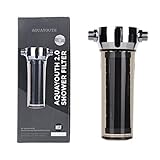
10. AQUAYOUTH 2.0 Carbon Shower Filter – The Independently Certified Pick
AQUAYOUTH 2.0 Carbon Shower Head Filter System | Removes Chlorine, Heavy Metals, And More | Great For Dry Skin/ Hair, And More | NSF Certified
NSF 177 and 372 certified
Multi-stage carbon, ceramic and brass
Heavy metals verified by institute
Blocks lime scale staining
Pros
- Only option here with NSF 177 chlorine and 372 lead certification
- Owners testing with water kits confirm chlorine removal including in warm water
- Stops lime scale and iron staining in the shower stall
- Reported long service life with one owner at four years
Cons
- Cartridge housing is chrome-plated plastic and leaks at the seam on some units
- Water sits in the housing instead of fully draining when the shower is off
- Cannot remove chloramines only free available chlorine
This is the one we would point at first for anyone who has been burned by unverified claims. The AQUAYOUTH 2.0 is NSF/ANSI 177 certified for free available chlorine and NSF/ANSI 372 certified for low lead content, and heavy metal reduction is confirmed by the Korea Environment and Water Works Institute rather than self-reported.
That matters because NSF/ANSI 177 tests for chlorine reduction in shower-temperature water over the life of the cartridge, which is a harder test than a laboratory bench measurement. Owners who tested their water with kits confirm the chlorine disappears, including in warm water where most carbon-only filters struggle.
The media stack runs activated carbon, polypropylene, ceramic, plated ABS housing and brass fittings, and the practical effect owners report is fewer mineral stains on the stall and glass. One owner describes four years of use without problems, which is a real service-life outlier compared with most cartridges.
That durability comes with physical weight at 1.2 pounds, and the housing drops the shower head about three inches. Slight pressure reduction is reported by some owners, which is the expected trade for a denser media bed.
What to check before buying
The seal. The cartridge housing is chrome-plated plastic, and the most common complaint in the reviews is a weep at the cover seam that appears after a few months of use. Extra Teflon tape fixes most of these, so keep some on hand.
Also know that water sits in the housing instead of fully draining when the shower is switched off. That is normal for a sealed inline unit, but it means you should not expect a completely dry shower arm when nobody is home.
Where it falls short
It removes free available chlorine only, not chloramine. This is stated plainly in the certification itself, and it is the single most important limitation to understand before buying on this list if your utility uses chloramine.
At 4.2 stars, the rating is dragged down by the seam leaks and the three-inch drop rather than by filtration performance. If you need verified chlorine removal above all else, that trade is worth making.
How Shower Filters Remove Chlorine
Chlorine is a strong oxidiser, and removing it means either chemically reducing it to the harmless chloride ion or adsorbing it onto a large surface. Every media in this list uses one of those two mechanisms, and the difference between them explains most of the performance differences you see in reviews.
KDF-55 is a copper-zinc alloy that runs an oxidation-reduction reaction, sometimes called a galvanic reaction, when water passes through it. The copper and zinc trade electrons with the chlorine molecule, converting it to chloride. Because the reaction is chemical rather than physical, KDF does not fill up the way carbon does, which is why it holds capacity in gallons rather than exhausting itself by surface area alone.
Calcium sulfite works alongside KDF in the same reaction, converting chlorine to chloride and calcium to calcium sulfate. It is fast and it works well, but it is consumed by the process, so it depletes and it cannot be regenerated.
Activated carbon, including coconut shell carbon, works by adsorption. Chlorine molecules stick to the enormous internal surface area of the carbon, and the media eventually saturates. Carbon is excellent for taste and odor and it is the weakest performer in a shower for a specific reason: contact time.
A shower moves water at roughly 1.5 to 2.5 gallons per minute through a canister a few inches wide. That is a very short dwell time, and a shower is also the hottest room in the house. Hot water accelerates the adsorption of some contaminants, but it also means less time for the water to interact with the media, so a carbon-only filter in a shower will always underperform against the same carbon in a gravity pitcher or a countertop unit.
Catalytic carbon is treated to react chemically rather than only adsorb, which speeds up chlorine removal in short contact times. It is a genuine upgrade over standard carbon, though not a match for KDF on chlorine alone.
Vitamin C, or ascorbic acid, is the only media here that meaningfully targets chloramine. It reduces chloramine chemically and quickly, and it is safe in a shower. The catch is that it depletes fast, so it works best as a supplementary stage in a multi-stage stack rather than as the sole media.
The practical takeaway: a filter with KDF-55 or calcium sulfite as the primary stage, carbon as a polish layer, and a sediment mesh at the front is the right architecture. Filters that list 15 or 18 stages are often just more of the same cheap media, so read the media list rather than the stage count.
Chlorine vs Chloramine and How to Check Your Utility
Free chlorine is the fast-acting residual most utilities add to keep water disinfectant in the pipes. It dissipates in a few days and is what you smell in the shower. Chloramine, also called monochloramine, is a more stable form that persists for weeks and travels further through a distribution system, which is why utilities use it.
This matters because the two behave differently against media. Free chlorine is neutralised by KDF, calcium sulfite, carbon and vitamin C. Chloramine is effectively untouched by standard carbon and only partially affected by KDF at shower contact times. Ascorbic acid is the reliable answer, and a filter without it will leave you wondering why the smell came back.
Here is how to find out which one you have, in three steps:
Read your utility’s annual Consumer Confidence Report. Every US water system publishes one by July 1 each year, and it names the disinfectant used. Search for your city or water district name plus Consumer Confidence Report.
Check the chlorine residual on your bill or your city’s water quality page. Some utilities publish a quarterly update stating whether they switched from chlorine to chloramine, and when.
Call and ask directly. Ask which disinfectant is used and whether a chloramine conversion is planned. Utilities answer this question routinely.
A second clue is behaviour. If the chlorine smell fades within an hour of running the tap but returns after the shower sits unused for a day, you are on free chlorine. If the smell is faint in the morning and builds through the day, that is the chloramine pattern.
There is a public lookup that lets you verify a filter model number’s certification status directly with NSF rather than trusting a badge on a listing. Search the model number on the NSF certified products database, and match the exact model, not just the brand.
What to Consider Before Buying a Shower Filter
Certification, and which one. NSF/ANSI 177 certifies free available chlorine reduction in shower-temperature water across the cartridge life, which is exactly the use case here. NSF/ANSI 42 certifies aesthetic effects such as taste, odor and particulate, which is a much weaker claim for a chlorine buyer. A listing that says NSF-certified without naming the standard is telling you nothing.
Media order. A sediment mesh at the front protects everything behind it. KDF-55 or calcium sulfite should be the working stage, with carbon for polish. If the only media listed is carbon, expect a partial result in a shower.
Flow rate and pressure. Below about 1.5 GPM a shower feels weak, and inline filters add some resistance. Units in the 1.75 to 2.5 GPM range with a slim body are the safer choice if your incoming pressure is already marginal, and a filtered shower head with air-induction spray can recover the feel of pressure.
Thread and fit. Nearly everything here is a standard 1/2 inch shower arm connection. Check whether you have a handheld, fixed, rain or combo head, because some units replace the head entirely while others sit inline in front of whatever you already own.
Cartridge cost and interval. This is the cost that surprises people. Two cartridges a year at a six-month interval is the running cost, and a three-month interval doubles it. A transparent cartridge or a colour-change indicator is worth paying for because a spent cartridge looks identical to a fresh one otherwise.
Five signs your cartridge is exhausted:
The chlorine smell returns in the shower steam.
Water clarity drops or the water develops a faint colour.
Skin and hair dryness creeps back over a few weeks.
Visible media in a clear housing is dark brown or black throughout.
Scale begins reappearing on the glass within days of cleaning.
What a shower filter will never do. It will not soften water, lower total dissolved solids, remove PFAS to any meaningful degree, or fully strip chloramine without vitamin C media. If any of those are your actual problem, you are shopping in the wrong category.
If you have ever wondered about the audio side of a long bathroom session, our Bluetooth speaker picks for the shower cover the other half of the problem.
Do Shower Filters Really Remove Chlorine?
Yes, but with honest limits. A shower filter with KDF-55, calcium sulfite or catalytic carbon as its working media will reduce free available chlorine substantially in shower water, and the reduction shows up as a measurable drop in chlorine concentration and a clear drop in the smell in the steam. This is the single most consistently reported result in the reviews we read, across every brand in this roundup.
What they do not do is solve four common problems. They do not soften water, because hardness is dissolved calcium and magnesium that no dechlorination media binds. They do not meaningfully lower total dissolved solids, which is why the PHILIPS listing states that outright. They do not fully remove chloramine without ascorbic acid in the path. And they do not treat PFAS, which requires adsorption media designed and certified for it at a scale a shower cartridge does not provide.
So who should skip a shower filter entirely? If your only complaint is hard water scale, buy an ion exchange softener or a whole-house scale inhibitor instead. If your whole home smells like a pool, a shower filter treats one fixture out of twelve, and you need a point-of-entry catalytic carbon system that covers every tap. If you are on a private well, chlorine is not your contaminant and you need a different filtration category entirely.
If your complaint is specifically chlorine drying out colour-treated hair, irritating eczema-prone skin, or filling a small bathroom with a pool smell, then a shower filter is exactly the right tool, and a carbon-free, KDF-first inline model will do the job properly.
Frequently Asked Questions
What is the best chlorine removal filter for a shower?
A multi-stage inline shower filter whose primary working media is KDF-55 copper-zinc or calcium sulfite, with a sediment pre-screen and a replaceable cartridge with a stated gallon capacity. Adding an NSF/ANSI 177 listing gives you independent verification of the chlorine claim. On chloraminated water, include vitamin C media because carbon alone will not work.
Do shower filters actually remove chlorine?
Yes, when the working media is a chemical reductant such as KDF-55 or calcium sulfite. The media converts free available chlorine to chloride, so concentration and the chlorine smell in the shower steam both drop measurably. Carbon-only filters do less in a shower because contact time is short. No shower filter softens water or lowers total dissolved solids.
How do I remove chlorine from my shower?
Four steps. First, install a filter with KDF-55 or calcium sulfite on your 1/2 inch shower arm, which takes under two minutes with no tools. Second, flush it for five minutes before the first use to clear carbon dust. Third, replace the cartridge every six to nine months or at the stated gallon capacity. Fourth, run an exhaust fan while showering to cut the chlorine vapour you inhale.
Do shower filters remove chloramine?
Not reliably without the right media. Chloramine is chemically stable, and standard activated carbon and KDF only partially affect it at the short contact times of a shower. Ascorbic acid, or vitamin C, is the media that reduces chloramine reliably. If your utility uses chloramine, buy a filter that lists vitamin C in the media stack or the smell will return within weeks.
Do dermatologists recommend shower filters?
They more often recommend reducing total exposure rather than a specific brand. Shorter, cooler showers and rinsing before getting in the water limit absorption, and a filter that reduces chlorine helps sensitive or eczema-prone skin. What a filter cannot do is treat a skin condition on its own, so persistent symptoms are worth raising with a clinician.
What are the downsides of using shower filters?
There are four real ones. They do not soften water, so hard-water scale and soap scum are unchanged. Cartridge refills are a recurring cost that is easy to forget. Inline units add a few inches of drop and can reduce pressure slightly. And chlorine reduction claims are often manufacturer-reported, so look for NSF/ANSI 177 rather than a badge with no standard named.
How do I know if my water is chlorinated or chloraminated?
Read your utility’s annual Consumer Confidence Report, which every US water system publishes by July 1 and which names the disinfectant in use. Check your city water quality page for a chlorine-to-chloramine switch announcement, or call the utility and ask. A behaviour clue also helps: a smell that fades after running the tap suggests free chlorine.
How often should I replace a shower filter cartridge?
Most inline cartridges are rated at four to six months of daily showers, and multi-stage units with a larger media bed reach six to eight months. Vitamin C-only cartridges deplete fastest, sometimes within three months. Replace on whichever comes first, the stated gallon capacity or the time interval, and buy a spare so you are never running an empty cartridge.
The Bottom Line on Chlorine Removal Filters in 2026
After comparing ten filters, the best shower filters for chlorine removal come down to architecture rather than branding. Any unit whose working media is KDF-55 or calcium sulfite will do the job; anything carbon-only will fall short at shower flow rates.
The Aquabliss SF100 is our pick for most people, because the review record behind it is the deepest and the six-month cartridge keeps the running cost reasonable. Choose the AQUAYOUTH 2.0 instead if independent certification matters more to you than the physical bulk of the unit. Go with the FEELSO if the highest-rated option and a shower head in the box suit your bathroom better, and pick the MakeFit if low water pressure is what pushed you to look at filters in the first place.
Skip all of them if your problem is hardness, if the chlorine smell is a whole-house issue rather than a bathroom one, or if you are on a private well. Check your Consumer Confidence Report before you buy, and add vitamin C media to the stack if it says chloramine.