

Short answer: the iSpring WGB21B is the best whole house water filter under 500 for most homes. It pairs a 5-micron sediment stage with a CTO carbon block, moves up to 15 gallons per minute on 1-inch ports, and holds 50,000 gallons per cartridge set, all without electricity. If your well has iron, look at the PUREPLUS well water model. If you want the fewest cartridge changes of any system here, the A. O. Smith central tank runs six years between service intervals.
This roundup covers 12 whole house water filters that all land under the 500 dollar ceiling, and every one of them is a cartridge or central tank design that installs on the main line. We looked at rated flow rate, certified capacity, housing size, certification marks, warranty length, and the real complaints owners report, then ranked them for what a budget buyer actually needs. Last reviewed and price-checked in October 2026.
One warning before you read further. A whole house filter does not soften water, and it does not remove fluoride, PFAS, salt, microbes, or nitrates. If your water tests hard or your well shows iron or sulfur, you need different hardware, and no amount of carbon will fake it. Water treatment communities keep repeating the same two pieces of advice: test first, and size the unit to your peak flow. We built the buying guide around both.
If you are still narrowing the field and your water comes from a well rather than a city line, our guide to the best whole house water filters for well water covers the pre-treatment questions that matter before you pick a media.
Table of Contents
- Top 3 Picks: Best Whole House Water Filters Under $500 (October 2026)
- All 12 Whole House Filters at a Glance
- 1. iSpring WGB21B 2-Stage – Best Overall Under 500
- 2. Express Water Ultimate Protection 3-Stage – Best Heavy Metal Coverage
- 3. iSpring WGB32B 3-Stage – Top Rated for Sediment-Heavy Water
- 4. A. O. Smith AO-WH-Filter – Lowest Maintenance Option
- 5. Waterdrop WHF21-PG 2-Stage – Most Versatile
- 6. Express Water 2-Year 3-Stage Replacement Set – Cartridge Planning for Existing Owners
- 7. iSpring WGB22B 2-Stage – Best for Well Sand and Rust
- 8. SimPure DB10C-2 2-Stage – Best Clear Housings for Monitoring
- 9. 3M Aqua-Pure AP904 – Best Flow Rate for Larger Homes
- 10. PUREPLUS WFM10BB2 2-Stage – Best With Pressure Gauges on Both Stages
- 11. Waterdrop WHF3T-PG 3-Stage – Best 3-Stage with KDF Media
- 12. PUREPLUS Well Water Iron Model – Best for Iron Staining
- How to Pick a Whole House Water Filter Under 500
- Frequently Asked Questions
- What is the best whole house water filter for the money?
- What GPM do I need for a whole house water filter?
- Do whole home water filters affect water pressure?
- How much water pressure drop is normal for a whole house filter?
- Why is my water pressure low after installing a water filter?
- What are the common problems with iSpring water filters?
- How much should a whole house water filtration system cost?
- Bottom Line for Under $500 Whole House Filters
Top 3 Picks: Best Whole House Water Filters Under $500 (October 2026)
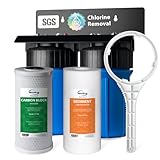
iSpring WGB21B 2-Stage
- 5-micron sediment plus CTO carbon block
- 15 gpm on 1-inch ports
- 50000 gallon capacity
- No power required

iSpring WGB32B 3-Stage
- Three 20 inch Big Blue stages
- 100000 gallon capacity
- 15 gpm
- One year limited warranty

Waterdrop WHF21-PG 2-Stage
- PP sediment plus GAC carbon
- 15 gpm
- 50000 gallon capacity
- Compact body for tight spaces
All 12 Whole House Filters at a Glance
Every system below was compared on the same five points. Read the flow rate column first, because it decides whether a unit can feed three showers and a dishwasher at the same time.
| Product | Specs | Action |
|---|---|---|
| iSpring WGB21B 2-Stage |
|
Check Latest Price |
 Express Water Ultimate Protection 3-Stage Express Water Ultimate Protection 3-Stage |
|
Check Latest Price |
| iSpring WGB32B 3-Stage |
|
Check Latest Price |
 A. O. Smith AO-WH-Filter A. O. Smith AO-WH-Filter |
|
Check Latest Price |
| Waterdrop WHF21-PG 2-Stage |
|
Check Latest Price |
 Express Water 2-Year Cartridge Set Express Water 2-Year Cartridge Set |
|
Check Latest Price |
 iSpring WGB22B 2-Stage iSpring WGB22B 2-Stage |
|
Check Latest Price |
 SimPure DB10C-2 2-Stage SimPure DB10C-2 2-Stage |
|
Check Latest Price |
 3M Aqua-Pure AP904 3M Aqua-Pure AP904 |
|
Check Latest Price |
 PUREPLUS WFM10BB2 2-Stage PUREPLUS WFM10BB2 2-Stage |
|
Check Latest Price |
 Waterdrop WHF3T-PG 3-Stage Waterdrop WHF3T-PG 3-Stage |
|
Check Latest Price |
 PUREPLUS Well Water Iron Model PUREPLUS Well Water Iron Model |
|
Check Latest Price |
1. iSpring WGB21B 2-Stage – Best Overall Under 500
iSpring WGB21B 2-Stage Whole House Water Filtration System, 50000 Gallons
15 gpm on 1 inch ports
50000 gallon capacity
5 micron sediment plus CTO carbon
12 month cartridge life
Pros
- Thick walled housings that feel durable
- Noticeably cleaner tasting water
- Reversible flow on the dual housing bracket
- Responsive US customer support
- No power required
Cons
- NPT fittings need careful Teflon sealing
- Threads can be damaged if over tightened
- Some housings crack after several years
I put the WGB21B first because it is the one system in this group that gets almost nothing important wrong. The first housing holds a 5-micron polypropylene string cartridge for sediment, the second holds an SGS-tested coconut shell CTO block that takes out chlorine taste and odor along with a range of volatile compounds. Capacity is listed at 50,000 gallons, which works out to roughly a year for a family of four on municipal water.
Flow is the part that impressed me most for a unit this size. It runs up to 15 gpm through 1-inch inlet and outlet ports, which is more than enough for three bathrooms and a laundry that draws at the same time. Because the two housings sit on a symmetrical bracket, the assembly can be mounted in either direction, and the pressure release valve makes a filter swap fast.
What owners report matches what the spec sheet promises. Reviewers consistently mention a sharp drop in chlorine smell within days and water that tastes cleaner throughout the house, and several note that the thick housings feel considerably more substantial than the price suggests. Unlike reverse osmosis systems, it leaves healthy minerals in the water and does not reduce total dissolved solids.
The recurring complaint is mechanical rather than filtration related. NPT fittings at the housing caps can weep if they are not wrapped properly with Teflon tape, and there are reports of threads being damaged by over-tightening during installation. Neither issue is a reason to avoid the unit, but both argue for a slow hand and a wrench rather than a hammer.
Check the fitting size before you buy
This system uses standard 10 by 4.5 inch housings, which is the most common size on the market and the easiest to find cartridges for. Confirm your shutoff and existing tee are 1-inch NPT before you order, because adapters to convert from 3/4-inch plumbing are sold separately and add cost to the total.
It also needs a solid mount. A stud or masonry anchor is better than drywall anchors, particularly with two full housings hanging off the bracket. Budget an hour and a half for a first-timer with basic plumbing experience.
Where this unit falls short
It will not touch iron, sulfur, or dissolved metals, and the carbon block has no iron-reduction media in it. If your well water runs orange in a glass or smells like rotten eggs, this is the wrong purchase no matter how good the taste results are on city water.
Some owners also report housings cracking after several years of service, which is a long-term durability concern rather than a first-year one. iSpring support has a track record of sending replacement parts, which softens the downside considerably.
2. Express Water Ultimate Protection 3-Stage – Best Heavy Metal Coverage
Express Water Whole House Water Filter System, Ultimate Protection, 3-Stage
17 gpm maximum flow
100000 gallon capacity
Sediment with KDF and polyphosphate
Stainless steel stand
Pros
- Covers sediment chlorine and heavy metals in one unit
- Stainless frame feels sturdier than plastic brackets
- Three gauges for per stage monitoring
- Anti scale protection extends appliance life
Cons
- Cartridge design means recurring replacement cost
- Bulky freestanding frame needs floor space
- Six month cartridge cycle
This is the pick for households that care about lead, arsenic, and chromium rather than just chlorine. The three stages run sediment, then a KDF and activated carbon combination, then laboratory packed polyphosphate for scale control. Rated capacity is 100,000 gallons and maximum flow is 17 gpm, the highest of the multi-stage plastic systems here.
The hardware is different from most competitors. Rather than a wall bracket alone, it comes with a stainless steel stand and bracket, and three pressure gauges let you watch each stage independently. That matters in practice, because a stage that starts to clog shows as a falling gauge reading before the whole house slows down.
Owners report clearer tasting water and real peace of mind about metals, and the stainless frame earns repeated mention as sturdier than the typical plastic bracket. The anti-scale stage is a genuine bonus if you have older galvanized plumbing and a water heater you are trying to protect.
The tradeoffs are footprint and running cost. This is a freestanding assembly roughly 30 inches tall, so it needs real floor space in a utility room, and the cartridge cycle is listed at six months, which is more frequent than several rivals. Budget for ongoing filter expense, because that is the ongoing reality of a three-stage cartridge design.
Why the three gauges are worth something
Most budget systems give you one gauge or none, which means you are guessing at change timing. With three, you can change the sediment stage on its own schedule before it starts starving the carbon stages downstream. That habit is the single biggest factor in how long a multi-stage system actually lasts.
Be aware the unit is specified for water with total dissolved solids up to 800 ppm. On a very hard municipal supply or a well with high mineral content, a dedicated softener or a different treatment approach is the better call.
Where this unit falls short
Its maximum flow of 17 gpm sounds generous, but the multi-stage layout means real-world flow through the carbon stages drops well below the headline number once cartridges load up. If you have four or more bathrooms, size up or plan a parallel prefilter.
It also does not address iron or sulfur at all, and the polyphosphate stage is a scale inhibitor rather than a softener, so it cannot lower water hardness.
3. iSpring WGB32B 3-Stage – Top Rated for Sediment-Heavy Water
iSpring WGB32B Commercial-Grade Whole House Water Filter System
Three 20 inch Big Blue stages
100000 gallon capacity
15 gpm on 1 inch NPT
1 year limited warranty
Pros
- Highest rating in the roundup
- Visible sediment capture in the first cartridge
- Works on well and city water including high iron
- Heavy duty 20 inch housings
Cons
- Heavy when full and needs two wrenches
- Manifold requires stud mounting
- Occasional shipping damage to threads
The WGB32B has the highest customer rating of any system we evaluated, at 4.7 stars across more than 2,200 reviews, and the reason shows up repeatedly in the feedback: owners of well water and city water alike open the first 20-inch canister and find it visibly dirty. The first stage is a 5-micron sediment filter followed by two CTO carbon block stages, rated at 100,000 gallons total.
Going to 20-inch Big Blue housings is a meaningful upgrade over 10-inch units. Media volume per stage is roughly four times higher, which means longer runs between changes and far less pressure drop as the cartridges load up. The system runs up to 15 gpm on 1-inch NPT connections and works within a 25 to 80 psi range.
This is the unit to consider if your main complaint is brown water, heavy sediment, or visible grit. The review data shows strong results on wells with high iron, and iSpring customer service has repeatedly sent replacement canisters and whole manifolds at no charge, which is a real long-term ownership advantage.
The cost of that heavy-duty build is handling. These housings are heavy when full and generally need two filter wrenches to remove, and the manifold has to be anchored into studs rather than drywall because of the load. A few reviewers also report damage in transit to the canister threads, so inspect the units on arrival.
Know your real flow requirement first
A 15 gpm rating is comfortable for a two or three bathroom home, but it is measured on clean media. If your household runs multiple showers and a washer simultaneously, plan for a spin-down prefilter upstream so sediment never reaches the carbon stages.
Also note the operating pressure range starts at 25 psi. Homes with low incoming pressure may need a booster pump, which pushes the project past this price band.
Where this unit falls short
Total dissolved solids rating is 300 ppm, the lowest of the multi-stage systems in this roundup, so it is a poor match for high-mineral water. And despite the strong well water feedback, none of its three stages contain dedicated iron reduction media, so it treats sediment rather than dissolved iron.
The warranty is one year limited, which is short against a unit this heavy, and again does not address the long-term transit damage reports.
4. A. O. Smith AO-WH-Filter – Lowest Maintenance Option
A. O. Smith Whole House Water Filter System | 600K Gal | AO-WH-Filter
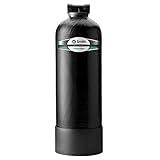
Activated carbon central tank
6 year or 600000 gallon life
7 gpm flow
NFS ANSI 42 certified
Pros
- Longest service interval of any system here
- No drain line and no backwash waste
- Simple install with no plumber needed
- NSF ANSI 42 certified chlorine reduction
Cons
- 7 gpm is the lowest flow rating in the roundup
- Does not reduce iron sulfur or TDS
- A prefilter ahead of the unit is recommended
Every other system on this list asks you to buy replacement cartridges. This one asks you to do it once every six years, or after 600,000 gallons. It is a central activated carbon tank rather than a pair of inline housings, which is why the maintenance math looks so different from the rest of the roundup.
There is no drain line, no backwashing cycle, and no water waste. Installation is straightforward, with a shutoff valve, nipple, and hose adapter included, and no plumber required for most setups. Chlorine taste and odor reduction is certified to NSF and ANSI 42 standards at a listed 96.9 percent, and a six-year limited warranty backs the tank.
Owners consistently point to the same thing: they installed it, the chlorine smell disappeared, and then they essentially forgot about it for years. For someone who does not want to track change intervals, that is worth a great deal.
The catch is flow. Seven gallons per minute is the lowest rating in this roundup, and it enters and leaves through 3/4-inch ports, which is smaller than the 1-inch standard everything else uses. It works on city and well water, but it is built for a home with moderate demand, not four simultaneous showers.
Reviews also make it clear this is a single-purpose system. It does not reduce iron, sulfur, or dissolved solids, and the manufacturer recommends a prefilter ahead of it to protect the carbon bed from sediment. On a well with any sediment at all, you need that extra stage and you need to budget for it.
Why the six-year interval is not a gimmick
Central carbon tanks hold far more media than a 20-inch inline canister, and they see a lower volume of water per minute relative to that media. The result is a service interval measured in years instead of months, and no drain line to install and no flush water to account for.
If you are in a home where nobody wants to remember a filter change date, this is the reason to choose it. Just confirm that 7 gpm covers your household peak demand before you commit.
Where this unit falls short
The 3/4-inch connections are the practical problem. If your main line is already 1-inch, you will be reducing the whole house to 3/4-inch through this unit, and that shows up as pressure drop at the far end of the home when multiple fixtures run.
It also targets chlorine taste and odor almost exclusively. Any expectation of iron reduction, sulfur treatment, or scale control beyond light surface protection will not be met by this tank.
5. Waterdrop WHF21-PG 2-Stage – Most Versatile
Waterdrop WHF21-PG 2-Stage Whole House Water Filter System, 5 Micron
15 gpm flow on 1 inch ports
50000 gallon capacity
PP sediment plus GAC carbon
Compact 14 inch body
Pros
- Entry price of the roundup with real filtration
- Sediment and chlorine reduction that works
- Simple DIY install with included wrench
- Compact body fits tighter utility spaces
Cons
- Shorter cartridge life than big blue systems
- Carbon changes about every 6 months
- Requires careful Teflon tape technique
If you want a working point of entry filter without spending much, this is the one. The WHF21-PG runs a 10 by 4.5 inch polypropylene sediment cartridge followed by a granular activated carbon cartridge, rated at 15 gpm and 50,000 gallons, with chlorine, lead, benzene, and mercury reduction claimed across the two stages.
Reviewers treat it as a capable budget filter rather than a compromise. Owners note that the coconut shell carbon genuinely improves taste and odor, that the sediment stage catches grit reliably, and that the whole thing installs over a weekend with the wrench included in the box.
The body is small, roughly 14 by 7 by 15 inches, which matters more than people expect in a cramped mechanical room. It also has no electrical requirement and passed over 100,000 water hammer tests according to the manufacturer, which is a meaningful durability claim for a plastic housing.
Where it economizes is cartridge life. The carbon cartridge is rated to change about every six months and the polypropylene element every three to six months, so you will be buying filters more often than you would with a 20-inch system. Budget for that on day one rather than being surprised later.
Owners who wrap the threaded connections properly with Teflon tape report leak-free installs, and those who rush the fitting report small drips. It is a fifteen-minute discipline issue rather than a defect.
The other thing worth noting is how quickly the results show up. Because this is a point of entry unit, the change is visible everywhere at once, in the kitchen tap, the shower, and the laundry, rather than only at one faucet. That instant whole house effect is the main reason people keep these compact two-stage units for years.
Check whether your main line can feed it
The unit is rated for 25 to 90 psi and temperatures up to 100 degrees, which covers most residential supplies. Confirm you have an accessible main shutoff and roughly a foot of clearance above and below for cartridge swaps, because tight installs are where cartridge changes turn into a job.
Do not install it below a water heater in a setup that starves it of flow. Whole house filters work on pressure, not gravity.
Where this unit falls short
It has no iron reduction media, so on a well with orange staining this will only catch the sediment that has already oxidized out of the water. It also does not address sulfur odor, and the smaller housings mean a steeper pressure drop once the sediment element loads up.
If you are on well water with heavy grit, add a spin-down prefilter ahead of this unit rather than replacing cartridges twice as often.
6. Express Water 2-Year 3-Stage Replacement Set – Cartridge Planning for Existing Owners
Express Water Whole House Water Filter Set, 3 Stage, 2-Year, 5 Micron
Two year replacement set
Up to 100000 gallons per set
Coconut shell carbon media
20 inch cartridge format
Pros
- Two year interval between cartridge changes
- Coconut shell media for sediment chlorine and PFAs
- High capacity cartridges hold flow without pressure loss
- Multiple pack configurations
Cons
- This is a cartridge set not a complete system
- Only fits matching Express Water 20 inch housings
- Does not reduce total dissolved solids
To be clear about what this is: it is a replacement cartridge set, not a whole house system. It is in this roundup because so many buyers purchase the system first and then discover the ongoing cartridge cost is the real decision, and this set is what that purchase looks like two years in.
The set contains coconut shell carbon media in a 20-inch format and is rated to handle up to 100,000 gallons per set depending on incoming water quality. It reduces sediment, chlorine, and PFAs, and it does not reduce total dissolved solids, which matches the behavior of the cartridge systems it fits.
Owners report steady flow with no measurable pressure loss across the set life, which is the practical benefit of buying matched 20-inch cartridges rather than mixing generic replacements. The set is also offered in one, two, three, six, and ten pack configurations, so you can buy the interval that matches your household usage.
The limitation is compatibility. These cartridges fit Express Water 20 by 4.5 inch housings specifically, and if your system is from a different brand the geometry and gasket will not match. Confirm your housing size and part number before ordering.
How to use this to plan a real three-year budget
Take your household’s daily water use, multiply by 365, and compare that against the 100,000 gallon rating to see how many sets you will go through. A family of four on city water typically lands somewhere between one and two sets per year, depending on how much of the water goes through irrigation or outdoor spigots.
Multiply that count by the set cost and divide by three to get an honest three-year ownership number. Doing this before you buy the system prevents the most common surprise in this category, which is the second purchase, not the first.
Where this falls short
It cannot be installed as a standalone system, so it does nothing on its own. And like every carbon cartridge in this roundup, it addresses taste, odor, and sediment rather than hardness, microbes, or dissolved metals.
If you are still choosing a system rather than replenishing one, go back to the at-a-glance table and start from the housing size you need.
7. iSpring WGB22B 2-Stage – Best for Well Sand and Rust
iSpring WGB22B 2-Stage Whole House Water Filtration System, 20” x 4.5” Sediment & Carbon Block Filters, Removes up to 99% Chlorine, Fine Sediment and Bad Taste Removal
2 stage 20 inch cartridges
100000 gallon capacity
15 gpm on 1 inch FNPT
1 year warranty plus lifetime support
Pros
- Universally available 20 inch cartridges
- Chlorine odor removed across the whole house
- Heavy housings that have held up over six years
- Lifetime US technical support
Cons
- No housing drain port so changes are messy
- Fittings need heavy Teflon tape or pipe dope
- Occasional leaking between housings
The WGB22B is the two-stage counterpart to the WGB32B, and it is the better choice if you want 20-inch media without the three-stage weight. It runs a 5-micron sediment filter followed by a CTO carbon block, at 100,000 gallons and up to 15 gpm through 1-inch FNPT connections with double O-ring seals.
What stands out is longevity. Long-term owners report the system still performing after six years, and the universal 20 by 4.5 inch cartridge format means replacements are available from almost any filtration supplier rather than only from the manufacturer. That keeps the long-term cost predictable, which matters when you are budgeting over three years rather than one.
Long-term owners also report a noticeable improvement in taste and odor across the house shortly after install, and that the heavy housings feel dense in the hand and have held together well. Lifetime US-based technical support has resolved leak issues for owners rather than leaving them to replace the assembly.
The two gripes are consistent. The housings have no factory drain port, which means every filter change is wet and messy, and the bracket ports are not tapered, so they demand generous Teflon tape or pipe dope to seal properly. A small amount of leaking between the two housings is also reported from time to time.
Why the universal cartridge size is the deciding factor
Cartridge availability is the quiet driver of three-year ownership cost. A 20 by 4.5 inch inline cartridge is one of the most standardized formats in the industry, which means competitive pricing, easy comparison shopping, and no risk of a proprietary cartridge that only one seller carries.
Check the cap style before ordering, since 20-inch housings come in threaded caps, bayonet caps, and snap caps, and a cap style mismatch is the most common reason a correctly sized cartridge simply will not fit.
Where this unit falls short
Two stages means the carbon gets whatever the sediment stage lets through, so on a well with heavy sand or grit the carbon life collapses. Add a spin-down prefilter upstream and this becomes a solid well water setup. Without one, it is a city water system with sand in the water.
It also does not reduce iron, sulfur, or total dissolved solids, and the one-year manufacturer warranty is the shorter of the two iSpring options here.
8. SimPure DB10C-2 2-Stage – Best Clear Housings for Monitoring
SimPure Whole House Water Filter System, 2 Stages Clear 10″ x 4.5″
Two clear DB10C housings
15 gpm flow
MPP sediment plus CTO carbon
Brass 1 inch NPT ports
Pros
- Clear housings show cartridge wear at a glance
- Brass ports and dual O-rings seal reliably
- Build quality comparable to pricier brands
- Effective on wells with iron discoloration
Cons
- Bracket is not a standard 16 inch spread
- Included drywall anchors are weak
- Needs a spin-down prefilter upstream
The defining feature of the SimPure DB10C-2 is the clear housings, and it turns out that matters more than expected. Being able to see the sediment cartridge darken in real time means you can judge cartridge life by looking rather than by guessing from a pressure gauge or a calendar, and that is a genuine maintenance advantage over opaque housings.
It carries an MPP sediment cartridge followed by a CTO carbon cartridge, rated at 15 gpm, with a listed capacity of 60,000 gallons and up to 80,000 gallons of filtered water per year. The carbon element is rated for three to six months and the sediment element for six to twelve.
Plumbers and homeowners rate the brass 1-inch NPT ports with double O-ring sealing highly, and several reviewers compare the build quality favorably to more expensive name brands. Owners on well water with iron discoloration and sediment report that it performs well for the money, though it is not a substitute for a dedicated iron filter.
The mounting is the weak point. The bracket is not a standard 16-inch spread for 2 by 4 framing, and the included drywall anchors are not strong enough for a loaded pair of housings. Anchor into a stud or masonry, and plan the layout before you order because the spacing is not what your studs expect.
It also runs within a 25 to 90 psi range and up to 100 degrees, which covers almost all residential supplies, and it needs no electrical connection at all. Two housings, one wrench, and a weekend is the whole installation for most homeowners.
Owners also note that the 10-inch footprint makes this one of the easier systems to squeeze into a mechanical room where a 20-inch pair would not fit, which is a practical advantage in older homes with tight utility spaces.
How visual monitoring changes your change schedule
Once you can see the media, you stop replacing on a fixed calendar and start replacing on condition. On clean city water the sediment cartridge can easily run its full six to twelve months, while on a well with sediment it may need attention far sooner. That flexibility is the return on the clear housing design.
It also makes leaks and bypass misconfiguration visible early, which is a small but real safety benefit on a system plumbed into the whole house.
Where this unit falls short
The 10-inch housings give it less media volume than the 20-inch systems, so the pressure drop comes on sooner as cartridges load. Owners on sediment-heavy wells are the ones who report this most, and the guidance from installers is consistent: put a spin-down filter ahead of it.
It also does not reduce sulfur, hard water, or dissolved metals, and the listed maximum total dissolved solids rating of 1,000 ppm is a ceiling rather than a target.
9. 3M Aqua-Pure AP904 – Best Flow Rate for Larger Homes
3M Aqua-Pure AP900 Series Whole House Water Filtration System AP904
20 gpm flow rate
100000 gallon capacity
Sanitary Quick Change cartridge
NSF Standard 42 and 372 certified
Pros
- Highest flow rating in the roundup
- Tool free sanitary quick change cartridges
- 304 stainless steel head construction
- Standard 1 inch connections
Cons
- Priced above most multi stage systems in this band
- Single cartridge means no separate sediment stage
The AP904 is the flow leader of this group, rated up to 20 gpm through standard 1-inch inlet and outlet connections, with a 100,000 gallon capacity activated carbon filter. For a house with three or more bathrooms and a busy laundry, that headroom is the reason to look here first.
It is also the only system here with a Sanitary Quick Change cartridge system, and that changes filter replacement completely. The AP917HD-S cartridge twists in and out by hand with no filter wrench, no housing cap to unbolt, and no mess. For anyone who dreads the quarterly filter change, this is the single most useful feature in the roundup.
The head is 304 stainless steel rather than polypropylene, which is why the listing weighs in at just over 10 pounds and why the unit stands at a little over 25 inches tall. It carries both NSF Standard 42 and NSF and ANSI 372 certification, and it is listed as suitable for chlorinated municipal and non-chlorinated well water.
The honest drawback is price. Owners note that it costs more than several multi-stage systems in the same class, and the single-cartridge design means there is no dedicated sediment stage protecting the carbon, so on sediment-heavy water the cartridge fouls faster and service intervals shorten.
Why wrench-free changes matter more than stage count
A three-stage system with wrench fittings costs you a wrench, some towels, and a wet floor every time you change media. A quick change housing costs you thirty seconds. Over a three-year ownership horizon, the labor difference between the two approaches is substantial, and it is the difference people notice first in daily life.
One cartridge also means one order to place and one part number to remember, which removes the most common cause of a missed change, which is simply forgetting which of three cartridges was due.
Where this unit falls short
There is no separate sediment stage, so on a well with sand or grit you should put a spin-down filter ahead of it. There is no iron reduction media, no sulfur capability, and no scale softening, so it is squarely a taste, odor, and sediment device for chlorinated supply.
Flow rating is a laboratory figure on clean media, and 20 gpm will fall as the carbon cartridge loads, so treat it as a ceiling rather than a guarantee.
Owners also point out that the cartridge life is listed at up to one year, so on municipal water the schedule is comfortable, and that the tool-free design makes it realistic to actually keep to that schedule instead of putting off a change that needs a wrench.
10. PUREPLUS WFM10BB2 2-Stage – Best With Pressure Gauges on Both Stages
PUREPLUS 2-Stage Whole House Water Filter, NSF/ANSI 42, Sediment & Carbon
Sediment plus coconut carbon block
NSF ANSI 42 certified
30000 gallon capacity
Gauges on both stages
Pros
- Two stage design in an affordable package
- NSF ANSI 42 certified for taste and odor
- External gauges on each stage
- Universal 10 inch housings accept many cartridges
Cons
- 30000 gallon capacity is the lowest here
- Cartridges sold as a dual set not individually
The WFM10BB2 earns its place by including something most systems in this price band skip: external pressure gauges on both stages. When the sediment gauge starts falling, you know that stage is loading up. When the carbon gauge drops, the carbon is spent. That turns filter changes from a guess into a measurement, and it is the reason owners highlight this unit first.
It runs a 5-micron polypropylene sediment stage for rust, sand, and debris followed by a 5-micron natural coconut activated carbon block for chlorine, taste, odor, and discoloration. It is NSF and ANSI 42 certified for chlorine, taste, and odor reduction, uses 1-inch inlet and outlet connections, and fits the standard 10 by 4.5 inch housing size.
The compromise is capacity. At 30,000 gallons it has the lowest rating in the roundup, which means more frequent cartridge changes than a 50,000 or 100,000 gallon system. That is a fair trade if your water is relatively clean, and a poor one on a well with sediment, where you will be changing media on a schedule rather than on condition.
Another detail worth knowing: the replacement cartridges are sold as a dual set rather than individually. That is simpler to order but means you cannot change one stage early and wait on the other.
How to read the two gauges
Note the pressure with the system bypassed and again with it in service. The difference is your system, and it grows as media loads. A drop of a few pounds is normal; a sustained drop toward the bottom of the gauge range means change now rather than later, because a starved carbon stage stops treating and starts growing bacteria.
Write the baseline number on the housing with a paint pen. In a year you will not remember it, and the comparison is the only useful part.
The two-stage layout is otherwise conventional and well executed, with 1-inch connections on both ends, a wrench in the box, and a natural coconut carbon block rather than a generic coal-based one. Reviewers note the carbon holds flow well, which is the practical difference between a carbon block that stays useful and one that chokes the line down.
Where this unit falls short
Thirty thousand gallons is a real limit for a family of four. If your household runs a lot of outdoor water or a large appliance load, expect this to be the cartridge system you replace most often, and that changes the three-year cost picture substantially.
It also does not reduce iron, sulfur, hardness, or dissolved solids, and the listed total dissolved solids ceiling of 500 ppm rules it out for high-mineral supply.
11. Waterdrop WHF3T-PG 3-Stage – Best 3-Stage with KDF Media
Waterdrop WHF3T-PG 3-Stage Whole House Water Filter System, 5 Micron
KDF composite with GAC and sediment
100000 gallon capacity
15 gpm steady flow
NSF ANSI 372 certified
Pros
- Clear chlorine reduction within weeks
- Brass lined housing feels solidly built
- 100000 gallon capacity with 12 month life
- Works on well and municipal supplies
Cons
- Wall bracket can bend under weight
- Fittings may need extra sealing tape
- All three cartridges must be replaced as a set
The WHF3T-PG is the only 3-stage system here that combines KDF composite media, granular activated carbon, and a sediment cartridge in a single standard housing format, and that combination is what separates it from the two-stage units. KDF media is specifically intended to reduce iron, manganese, and heavy metals while chlorine is present, which the carbon stages alone do not address.
It carries a claimed 97.72 percent chlorine reduction, a 100,000 gallon capacity, and a 15 gpm steady flow rate through 1-inch connections. It is NSF and ANSI 372 certified for lead-free materials, rated for a 12-month filter life that varies with water quality, and works across a 40 to 100 degree operating range.
Owners report chlorine smell and taste disappearing within weeks, and several mention softer feeling hair and skin and fresher smelling laundry as secondary benefits of removing more of the chemistry. The brass-lined housing is repeatedly described as solidly built, and the manufacturer reports passing over 100,000 water hammer tests.
The mechanical complaints are the reason this sits eleventh rather than higher. Reviewers report the wall bracket flexing under the weight of three full canisters, which pulls the housings inward and makes cartridge swaps awkward, and fittings that occasionally weep until resealed. All three cartridges must also be replaced together, since individual filters are not sold.
What KDF media actually adds
Plain carbon block is good at taste, odor, and chlorine. KDF adds catalytic media that targets dissolved metals, so this is the pick in the roundup for a household on city water that also wants some protection against metal reduction without jumping to a dedicated iron system.
That does not make it an iron filter. If a lab report shows meaningful dissolved iron, you still need dedicated iron media or an oxidation system ahead of this, because carbon fouls when iron is present.
Where this unit falls short
Bracket flex is a structural concern, so mount it into studs and check it after the first month. Replacement economics also favor larger systems, since a mandatory three-cartridge set at twelve months is a meaningful recurring cost.
It does not soften water, remove microbes, or address nitrates, and its 1,000 ppm total dissolved solids ceiling rules it out on high-mineral wells.
The whole assembly runs on 1-inch connections, weighs just over 19 pounds when full, and stands about 26 inches tall, so it fits a standard utility space without needing a dedicated frame. Reviewers also mention that Waterdrop support replaced a damaged delivery quickly, which is worth knowing before you commit to a three-stage layout.
12. PUREPLUS Well Water Iron Model – Best for Iron Staining
PUREPLUS 2-Stage Whole House Water Filter, Clear Housing, for Well Water
Sediment and iron removal first stage
30000 gallon capacity
Clear housing with integrated gauge
10 inch compact format
Pros
- Composite sediment and iron stage for wells
- Clear housing for visual inspection
- Integrated gauge signals change timing
- Compact footprint for tight spaces
- Lowest cost two stage unit here
Cons
- 30000 gallon capacity means frequent changes
- Iron media suits moderate levels not heavy wells
- Only one gauge for the whole assembly
This is the unit to look at if your well water leaves orange stains in sinks, tubs, and laundry. Instead of a plain sediment cartridge in the first housing, it uses a dual-function composite element that combines polypropylene sediment media with dedicated iron removal media, followed by a natural coconut activated carbon block for chlorine, odor, and organics.
It is a compact 10 by 4.5 inch design with clear housings and an integrated pressure gauge, so you can see the cartridge condition and track replacement timing without disassembling anything. Capacity is 30,000 gallons, inlet and outlet are 1-inch, and it operates from 40 up to 100 degrees.
Owners with iron staining rate it positively for the combined first stage, and the low cost makes it an easy first move for a household that has not yet tested its well. The clear housings are appreciated for the same reason they are on the SimPure, which is that visible media beats a calendar.
The honest limits matter here. The iron media is suited to moderate levels rather than heavily contaminated wells, and a well with significant iron will load a 30,000 gallon cartridge much faster than the rating suggests. The eight percent one-star share in the reviews reflects exactly that, owners on high-contaminant wells running out of capacity too quickly.
Test before you buy, not after
Have the well tested for dissolved iron, manganese, and hydrogen sulfide before ordering. If iron is only slightly elevated, this composite cartridge is a sensible and inexpensive fix. If the numbers are high, a dedicated iron reduction or oxidation filtration system will outperform this unit, and buying twice is what happens when you skip the test.
Carbon media fouls quickly when iron is present, so if your well has both, iron media has to sit upstream of the carbon, which is the order this unit uses and the order you should keep.
Where this unit falls short
Thirty thousand gallons is the lowest capacity here, and on a high-iron well you will be replacing media more often than the rating implies. It also has a single gauge covering the assembly rather than one per stage, so you cannot tell which cartridge is loaded up.
It does not treat sulfur odor, hardness, microbes, or dissolved metals beyond the iron stage, and well water that is used for drinking without a disinfection step deserves a professional evaluation rather than a cartridge purchase.
Reviewers describe the build as competent for the money, with 1-inch connections, a wrench included, and a footprint that disappears into a small cabinet. The important caveat is that this is a moderate iron solution, not a substitute for professional well treatment when a lab report shows significant contamination.
How to Pick a Whole House Water Filter Under 500
Every system in this roundup is a good product. The wrong one for your water is still a bad purchase, so the selection process matters more than the brand. Work through these steps in order and the model choice takes care of itself.
Test your water before you spend
This is the single most repeated recommendation in water treatment forums, and it is the one most people skip. A certified lab panel covering iron, manganese, hardness, pH, chloride, and sulfur costs less than one replacement cartridge set and removes the guesswork from a 500 dollar decision. If you are on city water, your utility publishes an annual water quality report, which is usually enough to rule out the serious contaminants.
Size the flow rate to your home
Pick a rated flow rate at or above your household peak demand, not your average. A rough rule: a two or three bathroom home needs about 10 gpm, and four or more bathrooms need 15 gpm or higher. Add margin if you have a large house with multiple laundry machines or a garden irrigation line, because outdoor flow steals capacity from indoor pressure.
Once you have a number, ignore ratings below it. A 7 gpm unit in a three bathroom home will feel fine until two showers and the dishwasher run together, and that is when the complaints start.
What the certification numbers actually mean
Certification marks are the most useful and least understood part of any listing. NSF and ANSI 42 certifies taste, odor, and chlorine reduction, which is why the PUREPLUS and the A. O. Smith both carry it. NSF and ANSI 53 certifies health-related contaminant reduction, including lead and heavy metals, and it is the standard to look for when a listing claims to reduce metals. NSF and ANSI 372 certifies that the materials themselves are lead-free, which is what the 3M Aqua-Pure and the Waterdrop 3-stage carry. None of these certify hardness reduction, and no certification in this roundup covers microbes, salt, or PFAS at whole house scale.
One practical note on airflow and humidity: if your goal is comfort rather than taste, a whole house dehumidifier handles a very different problem than a filter does, and the two are often confused. See our best whole house dehumidifiers if dampness is your actual complaint.
What you give up at this price ceiling
Five things, honestly. You get no lifetime warranties, only the one to six year limited warranties listed on each card. You get no UV sterilization, so well water still needs disinfection. You get lower flow ceilings than backwash systems, which is why nothing here exceeds 20 gpm. You get shorter media life in the smaller 10-inch housings, which is the difference between a 30,000 gallon rating and a 100,000 gallon one. And you get no softening, because no filter at any price changes hardness. A water softener is a separate piece of hardware, usually installed before the filter.
DIY install or call a plumber
Installing any system on this list is a cut-and-fit job on the main line, and it is within reach of a handy homeowner with a shutoff, a crimper or wrench, and Teflon tape. The slow, careful part is sealing threads, not connecting pipes. Call a plumber if your main line is galvanised and old, if you need to move the tee, if your pressure sits below 25 psi, or if you are not certain how to shut off water to the house without flooding the mechanical room.
Who should skip a whole house filter entirely
Renters and condo owners with no accessible main line shutoff cannot install any of these, and should not try. Households on hard water above roughly 7 grains per gallon will not see a meaningful benefit from a filter, and should budget for a softener instead. Anyone on a well with hydrogen sulfide needs oxidation or air injection treatment, not carbon, and anyone with a microbiological concern needs professional disinfection work. In all three cases, buying a filter at this price band is spending money on the wrong problem.
If air circulation in a large home is the concern rather than water quality, our picks for the best whole house fans for hot climates cover that side of whole home comfort.
Frequently Asked Questions
What is the best whole house water filter for the money?
Under 500 dollars, the iSpring WGB21B is the strongest all-rounder: a 5-micron sediment stage plus a CTO carbon block, 15 gpm on 1-inch ports, and 50,000 gallons of capacity without electricity. The iSpring WGB32B is the step up for sediment-heavy water, and the A. O. Smith central tank wins on maintenance with a six year service interval.
What GPM do I need for a whole house water filter?
About 10 gpm covers a two or three bathroom home, and 15 gpm or more is right for four or more bathrooms or a house with multiple laundry machines. Rate the filter above your peak demand rather than your average, since flow drops as cartridges load. Anything rated 7 gpm or below is sized for modest homes only.
Do whole home water filters affect water pressure?
A healthy filter should not, but any filter that has been ignored does. Loaded sediment cartridges and exhausted carbon are the usual causes of low pressure after an install, and adding a spin-down prefilter upstream is the standard fix. If pressure is still low with fresh media, check for a partly closed bypass valve and confirm the unit is matched to your line size.
How much water pressure drop is normal for a whole house filter?
A few pounds of difference between the bypassed and in-service readings is normal, and a well-sized system stays within that range on clean media. A sustained fall of more than a few pounds points to a loaded prefilter or a partly closed valve rather than the filter itself. Recording a baseline pressure reading at install makes the comparison meaningful later.
Why is my water pressure low after installing a water filter?
The most common causes are a loaded or wrong-sized prefilter, a leaking fitting that has partly closed the line, and a unit installed on a line smaller than the household peak demand. Start by measuring pressure with the filter bypassed, then with it in service. If the difference is large, change the sediment cartridge before anything else.
What are the common problems with iSpring water filters?
Owners most often report NPT fittings that weep when they are not sealed with enough Teflon tape, housing threads damaged by over tightening during install, and leaking between housings on two-stage models. Reviewers also note that the housings have no drain port, so filter changes are wet. iSpring support is repeatedly praised for replacing parts at no charge.
How much should a whole house water filtration system cost?
In the budget band covered here, expect a two-stage sediment and carbon system to land in the low hundreds and a three-stage or central carbon tank nearer the 500 dollar ceiling. The system is only part of the cost, so budget cartridges, any spin-down prefilter, and a plumber if your main line needs work. The cheapest system is rarely the cheapest over three years.
Bottom Line for Under $500 Whole House Filters
For most homeowners on municipal water, the iSpring WGB21B is the best whole house water filter under 500 because it balances flow, capacity, and price without a weak point. If sediment is your main complaint, step up to the iSpring WGB32B for 20-inch media. If you want to stop thinking about filter changes, the A. O. Smith central tank trades flow for a six year interval. And if your water comes off a well, start with a test result, because iron and sulfur problems need media that no system on this list provides.
Use the buttons below to check current pricing, and read our deeper well water guide before you commit to a cartridge system for untreated groundwater.