

Yes, a whole house filter can remove iron, but only if the technology matches the concentration in your water. The systems that work on light iron (roughly 3 ppm and below) are replaceable cartridges, and they clog and give up long before the water looks bad again. Anything heavier needs an oxidation system that backwashes itself, and the choice of filter type matters more than the brand on the tank.
That is the trap most buyers fall into. Retail listings for a wide range of whole house water filters promise iron removal without printing a maximum concentration anywhere visible, so a household with 10 ppm of iron ends up with a carbon and KDF cartridge that looked affordable on the shelf. This guide covers the 12 systems worth your attention in 2026, along with the water chemistry that decides which one you actually need.
I have spent years reading owner reports on r/WaterTreatment and comparing manufacturer specification sheets line by line for this category, and the pattern is consistent: the systems that get recommended a second time are the ones sized for the water and the flow, not the ones with the longest feature list. If you want a broader primer first, our guide to the best whole house water filters for well water covers filtration basics across the board.
Table of Contents
- Top 3 Picks: Best Whole House Water Filters For Iron Removal (October 2026)
- Every System Side by Side in 2026
- What Kind of Iron Is Actually in Your Water?
- The 12 Best Whole House Iron Filters for 2026
- 1. iSpring WGB21BM 2-Stage Iron Filter
- 2. Express Water 3-Stage Iron and Manganese System
- 3. iSpring WGB32BM 3-Stage Iron and Manganese System
- 4. iSpring WGB22BM 2-Stage Iron and Manganese Filter
- 5. Fleck 5600 SXT Air Injection Iron Eater 1.5 cu ft
- 6. Home Master 3-Stage Whole House Filtration System
- 7. AFWFilters Fleck IRON Pro 2 Softener and Iron Filter Combo
- 8. PUREPLUS 1-Stage Whole House Iron and Manganese Filter
- 9. PUREPLUS 2-Stage Chlorine, Iron and Manganese Filter
- 10. Waterdrop WHF3T-FG 3-Stage Well Water System
- 11. PUREPLUS 20 Inch 3-Stage Pleated, GAC and Iron Filter
- 12. H&G Lifestyles Whole House Iron and Manganese Filter
- What Homeowners Report and Why Cheap Cartridge Filters Fail
- How to Choose a Whole House Iron Filter
- Frequently Asked Questions
- Will a whole house filter remove iron?
- What is the best water treatment for high iron levels?
- What is the best way to filter iron out of well water?
- How many ppm of iron can a water softener remove?
- How can I remove iron and sulfur from my well water?
- Is iron in my well water bad for you?
- How do I know if my well pump can handle backwashing?
- Why is my whole house iron filter not removing iron?
- Which Whole House Iron Filter Should You Buy?
Top 3 Picks: Best Whole House Water Filters For Iron Removal (October 2026)

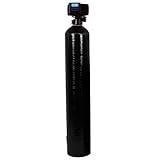
Fleck 5600 SXT Air Injection
- Air injection oxidation
- 1.5 cu ft catalytic carbon
- Automatic daily backwash
- Complete system with tank
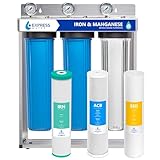
Express Water 3-Stage
- Iron and manganese focused
- 17 GPM flow
- Stainless steel frame
- Pressure gauges included
Every System Side by Side in 2026
Every filter below is listed with the iron range it is actually rated for, because that single number decides whether the system is right for your house. One of these is an automatic oxidation tank that flushes itself to a drain, two are regenerable resin systems, and the rest are replaceable cartridge systems that need scheduled changes.
| Product | Specs | Action |
|---|---|---|
| iSpring WGB21BM 2-Stage Iron Filter |
|
Check Latest Price |
| Express Water 3-Stage Iron System |
|
Check Latest Price |
 iSpring WGB32BM 3-Stage iSpring WGB32BM 3-Stage |
|
Check Latest Price |
 iSpring WGB22BM 2-Stage iSpring WGB22BM 2-Stage |
|
Check Latest Price |
| Fleck 5600 SXT Air Injection |
|
Check Latest Price |
 Home Master 3-Stage Well Filter Home Master 3-Stage Well Filter |
|
Check Latest Price |
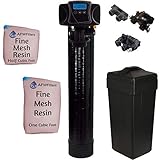 AFWFilters Fleck IRON Pro 2 Combo AFWFilters Fleck IRON Pro 2 Combo |
|
Check Latest Price |
 PUREPLUS 1-Stage Iron and Manganese PUREPLUS 1-Stage Iron and Manganese |
|
Check Latest Price |
 PUREPLUS 2-Stage Chlorine and Iron PUREPLUS 2-Stage Chlorine and Iron |
|
Check Latest Price |
 Waterdrop WHF3T-FG 3-Stage Waterdrop WHF3T-FG 3-Stage |
|
Check Latest Price |
 PUREPLUS 20 Inch 3-Stage PUREPLUS 20 Inch 3-Stage |
|
Check Latest Price |
 H&G Lifestyles Iron and Manganese H&G Lifestyles Iron and Manganese |
|
Check Latest Price |
What Kind of Iron Is Actually in Your Water?
Ferrous iron, also called clear-water iron, is dissolved in the water and the water looks clean until it hits air. That is why a glass of well water from the tap can be clear and a glass poured an hour later has orange grit settling at the bottom. It is a plumbing problem rather than a health problem at typical levels, and the EPA treats it as an aesthetic secondary standard of 0.3 mg per liter.
Ferric iron, or red-water iron, is already an oxidized particle. The water itself runs orange or rust colored, which usually means the source water has picked up dissolved oxygen somewhere in the plumbing or the well casing. It is still treatable, but ordinary KDF and carbon cartridge media struggle because the particles are larger and load the filter much faster.
Iron bacteria is a different problem entirely. A slime that grows in the well casing, leaves orange streaks that reappear within days of cleaning, and produces a rotten egg smell is a bacterial issue, not a mineral issue. Filtration alone will not clear it because new growth keeps seeding the pipes, and the fix is shock disinfection combined with an iron system sized for the load it creates.
Whichever form you have, the first move is a lab test on raw water before any treatment. Ask for total iron, manganese, pH, hydrogen sulfide, hardness, and a coliform count, and read the result as a number rather than a word. Our advice in the buying guide below covers what to do with each reading.
The 12 Best Whole House Iron Filters for 2026
1. iSpring WGB21BM 2-Stage Iron Filter
iSpring WGB21BM 2-Stage Whole House Water Filtration System, 10” x 4.5” Carbon Block and Iron & Manganese Reducing Filters, 1″ Ports
Iron 3.0 to 0.01 ppm
Manganese 1.0 to 0.01 ppm
Big Blue cartridges
15 GPM, 50000 gallons
Pros
- Rated for iron up to 3.0 ppm and manganese to 1.0 ppm
- Beefy housings with double O-rings
- Pre-assembled bracket for simple DIY work
- Reversible flow if bracket orientation does not match
- Support ships parts and brackets quickly
Cons
- NPT fittings leak unless wrapped carefully with PTFE tape
- Housings can rock if the eight top bolts are not tightened evenly
- Cartridges never screw fully in so over-tightening risks cracking the housing
This is the one I recommend first for most households, and the reason is not the specification sheet, it is the 4.6 rating across more than 4,000 owner reports. The second stage reduces iron from a maximum of 3.0 ppm down to 0.01 ppm and manganese from 1.0 ppm to 0.01 ppm, and the media is catalytic rather than consumable, so it does not turn green the way greensand does.
Stage one is a coconut shell carbon block that takes out more than 90 percent of chlorine along with VOCs such as herbicides and industrial solvents. That matters on municipal water, where the chlorine is often what is holding iron in solution in the first place. The whole assembly comes pre-mounted on a bracket with a filter wrench in the box, which makes the install a weekend job for anyone comfortable with a wrench and a bucket.
Owners on well and city water report clearer water and reduced spotting within days to weeks, and the support experience comes up constantly as a reason for the rating. Replacement parts and free brackets ship quickly, which matters more than it sounds when a housing has been sitting in a garage for two weeks.
The honest limit is the 3.0 ppm ceiling. Above that, the iron stage saturates and the pressure drop across the housing becomes obvious. My rule is that 3 ppm is the real working limit for this housing, not the number on the box, so anything heavier needs a backwashing tank or a filter built around oxidation.
One detail that trips people up: install the iron stage first in the direction of flow, not the sediment stage. On this manifold the carbon block is stage one and the iron stage is stage two, so if you plumb it backwards you will load the carbon with iron particles and destroy its life in a few months.
What to check before you buy
Confirm your test result is under 3 ppm and that there is no hydrogen sulfide, because this configuration does not target sulfur. The flow rating of 15 GPM is generous for a typical single-family home, so pressure drop is not the deciding factor here.
Check that you have roughly 18 inches of vertical clearance for the housing and about 16 inches of horizontal space for the bracket, since the assembly is 16.5 by 8.5 by 18 inches. The 1 inch NPT ports need full-threaded connection, not push-to-connect, if you want the leak-free seal owners report.
Who should skip it
Skip this system if your lab report shows iron above 3 ppm, or if you also need sulfur removal, since neither stage is rated for hydrogen sulfide. It also does not reduce total dissolved solids, so anyone chasing TDS still needs a reverse osmosis unit at the drinking faucet.
Skip it as a primary iron fix if your water is very low pressure. Under about 30 psi the cartridge housing adds meaningful restriction, and owners on marginal supplies report needing to rinse sediment cartridges off-line every month. In that case a larger backwashing tank handles both sediment and iron without the manual labor.
2. Express Water 3-Stage Iron and Manganese System
Express Water Whole House Water Filter System, Iron & Manganese, 3-Stage
Iron and manganese focused
17 GPM flow
Stainless steel stand
100000 gallon capacity
Pros
- Deluxe stainless steel bracket and free-standing frame
- Built-in pressure release buttons and gauges
- Iron and manganese specific design
Cons
- Bulky and heavy at 57 pounds
- Cartridges need changing every 6 to 12 months
- Does not reduce total dissolved solids
This is the freestanding stainless system you see in mechanical rooms, and it is the most physically substantial cartridge option in the group. At 23.5 by 8.5 by 29.25 inches and 57 pounds, it looks like equipment rather than a plastic filter head, and that impression matches how it performs in a house with hard well water.
The design is specific: a three-stage point-of-entry system engineered for iron and manganese reduction rather than general filtration. Pressure release buttons on each housing and the included gauges make filter changes safe, which is the single most common complaint people have with the cheaper plastic systems, where the only way to relieve pressure is to crack a fitting and spray the ceiling.
Homeowners in this category talk about cartridge systems most in one direction: they handle light iron well and then stop. On r/WaterTreatment the recurring pattern is a system like this working for a year or eighteen months before orange water returns, which is exactly what the 100,000 gallon and 6 to 12 month replacement interval predicts if your iron load is near the top of the range.
At 17 GPM it is a generous service flow for a single-family home, and the manufacturer recommends placing it ahead of a water softener so the resin does not get fouled. That ordering matters more than any brand decision, and getting it backwards is the reason so many owners end up replacing resin every two years instead of every ten.
The stainless stand is genuinely useful if your install point is a freestanding utility room rather than a wall, because the frame carries the weight instead of your wall studs. Operation range is 20 to 80 psi, and the upper temperature rating is 100 degrees, so do not put it on a hot recirculation loop without checking.
What to check before you buy
Measure the footprint against your mechanical room. At 23.5 by 8.5 by 29.25 inches it needs floor space and a drain-free installation area, and you need room to pull a full canister straight up when it is time for a change.
Plan your cartridge budget. Replacement sets are bought separately and the stage count means you are ordering multiple elements each cycle, so the ongoing cost over five years is meaningfully higher than the tank cost suggests.
Who should skip it
Skip it if your iron is above 3 ppm. This is a cartridge design, and no cartridge in this list changes that. It is also the wrong choice for anyone who wants total dissolved solids removed, since the system preserves minerals rather than stripping them.
Skip it if the 57-pound weight and the floor footprint are a problem. Two people should be available for the install, and if your filter area is a tight crawlspace this is not the unit to force into it.
3. iSpring WGB32BM 3-Stage Iron and Manganese System
iSpring WGB32BM Iron, Manganese Whole House Water Filter System
Iron up to 3.0 ppm
Manganese up to 1.0 ppm
20 inch Big Blue cartridges
15 GPM, 100000 gallons
Pros
- Immediate visible change in water color and odor
- Large 20 inch cartridges hold more media and last longer
- Excellent technical support that ships media quickly
- Straightforward DIY install on a pre-assembled manifold
- Pairs well with a spin-down prefilter and UV stage
Cons
- Plastic 1 inch NPT threads cross-thread easily and leak
- Full 20 inch canisters are heavy and awkward when full of water
- No built-in drain fittings so changes spill water
This is the bigger brother of the WGB21BM, and the difference that matters is the 20 inch Big Blue format cartridges. They hold substantially more media than a 10 inch housing, which in practice means fewer changes and a slower pressure climb between services, at 100,000 gallons of combined capacity.
The stack is the same idea in three stages: a polypropylene sediment filter rated to 5 microns first, a coconut shell carbon block second, and the FM25B catalytic iron and manganese stage third. The iron stage is rated to 3.0 ppm and the manganese stage to 1.0 ppm, and the catalytic media is not consumed, which the manufacturer says lasts up to three times longer than greensand.
Owners describe a dramatic change in water clarity and taste, and support is repeatedly named as a reason for the 4.6 rating. Installation friction is dominated by two things: sealing the plastic threads, and knowing how tight the housings should be. The instructions do not give a torque figure, and getting it wrong is the fastest route to a slow leak at the center of the cap.
A useful tip that shows up in owner reports: assemble the manifold on a bench before you bring it to the wall. The bracket ships configured for one flow direction and sometimes arrives opposite to your plumbing, and having to remove all the bolts to reverse it is much easier on a workbench than in a crawlspace.
There are no built-in drain fittings, so when you change a cartridge you are draining several gallons of water by hand into a bucket. Some owners add a tee and a hose bib downstream to make this painless, and if you plan ahead that ten-dollar part saves a lot of mess.
What to check before you buy
Check that your vertical clearance is at least 30 inches, because full 20 inch canisters are tall and heavy. Operating pressure is 25 to 80 psi, so on a low-pressure rural supply you may be running at the very bottom of the range where the housing restricts flow.
Confirm 1 inch NPT is fine for your plumbing. If you have an existing manifold with different fittings, budget for transition adapters and proper PTFE tape, because these plastic threads are the number one leak source in this category.
Who should skip it
Skip it if you need to remove hydrogen sulfide, and skip it above 3 ppm iron. Neither is within the design envelope, and buying this for a 10 ppm well is the most common expensive mistake we see in this category.
Skip it if you are not comfortable sealing plastic threads or handling a waterlogged 20 inch canister alone. If you would rather never touch a cartridge again, the automatic tank further down this list removes that entire maintenance category.
4. iSpring WGB22BM 2-Stage Iron and Manganese Filter
iSpring Iron, Mangaese Whole House Water Filter System Also Eliminates Chlorine, Taste, and Odor, 2-Stage Commercial-Grade 20″ x 4.5″ Industry Standard-Sized Filters, 1″ Inlet/Outlet, Model: WGB22BM
Iron up to 3.0 ppm
Manganese to 1.0 ppm
20 inch standard cartridges
No power or salt
Pros
- Industry standard 20 inch cartridges are widely available
- Coconut shell carbon block removes up to 99 percent chlorine
- Ferrous and manganese stage rated to 3.0 and 1.0 ppm
- Tankless design with no power and no salt
- Lifetime technical support from a US team
Cons
- Not suitable for iron above 3 ppm in well or pond water
- Does not reduce total dissolved solids
- Same plastic thread sealing caution as other iSpring models
The case for this model is boring and that is the point: it uses the industry standard 20 inch by 4.5 inch cartridge format, so when you need a replacement you can walk into any hardware store and buy one. Every other 20 inch housing on the market will usually accept the same element, and that is a genuine long-term saving compared with proprietary media.
The carbon block first stage removes up to 99 percent of chlorine along with taste and odor, and the second stage FM25B handles iron up to 3.0 ppm and manganese up to 1.0 ppm. Capacity is 100,000 gallons, which the manufacturer puts at roughly a year for a family of four, and there is no power, no salt, and no drain involved at any point.
Reviewers rate the balance of stages highly, and the recurring critique is not about performance but about fit: this is a well water cartridge and the 3 ppm ceiling is exactly where most serious well problems begin. The manufacturer is direct about it, recommending a different series entirely for iron above 3 ppm, and we would rather repeat that warning than let anyone find out at 2 am with orange water running into a bathtub.
One small task people forget: the cartridges ship wrapped. You need to unwrap them fully before installation, and the plastic wrap left in place will block flow and look like a failed unit.
The system is rated for up to 15 GPM and 25 to 80 psi, and the tankless design means there is nothing to plumb beyond the inlet and outlet. That simplicity is worth something in a DIY install, because the failure modes of a cartridge head are entirely about the fittings.
What to check before you buy
Look at your local hardware shelf before you order. If 20 inch Big Blue elements are easy to get in your area, this system will never leave you waiting on a cartridge, and that practical point outweighs small differences in media.
Verify your water pressure sits comfortably inside the 25 to 80 psi range, and note the upper temperature rating of 100 degrees if you are considering a recirculation line.
Who should skip it
Skip it for anything above 3 ppm, which is the most common well condition that people underestimate before testing. Skip it if you need sulfur removal or a metallic taste that comes from something other than iron, since neither stage addresses hydrogen sulfide.
Skip it if you want the lowest total cost per year above all else. There is a single-stage option later in this list that costs less to buy, though you give up the chlorine stage and the 20 inch format.
5. Fleck 5600 SXT Air Injection Iron Eater 1.5 cu ft
DuraWater Fleck 5600 SXT Air Injection Iron Eater Filter 1.5 cu ft, Black
Air injection oxidation
1.5 cu ft catalytic carbon
Automatic daily backwash
Pros
- Drops well iron from double-digit ppm readings to zero on test
- Eliminates orange staining on toilets tubs and laundry
- Handles hydrogen sulfide odor alongside iron
- Automatic daily backwash with no salt to haul
- Notices seals and valves are user-serviceable
Cons
- Default settings can overwhelm a septic drain field
- Air injection cone can weep a small amount of water
- Valve programming is confusing without a support call
This is the first system in the list that is genuinely built for high iron, and the reason is the air injection oxidation process. A pocket of air is drawn into the water, the dissolved ferrous iron oxidizes into solid particles, and the catalytic carbon media bed traps them. An automatic daily backwash then flushes the captured iron to a drain, so there is no cartridge to buy and no water softener salt to haul.
Owners report measured iron readings dropping from 9 to 14 ppm down to zero, and rust stains disappearing from toilets, tubs, and laundry within days. Several also report the hydrogen sulfide odor clearing at the same time, because catalytic carbon media handles sulfur alongside iron and you are not adding two tanks to the plumbing.
The package is complete: a Fleck 5600 SXT digital metered control valve, 1.5 cubic feet of upgraded Centaur catalytic carbon media, a 10×54 mineral tank, and a 1 inch plastic bypass valve. The bypass is the detail that matters most for install, because it lets you isolate the unit for service without shutting off water to the house.
Two cautions come up consistently. The air injection cone can weep a small amount of water while it draws air in, which is normal but surprising if you are not expecting it. And the default regeneration settings may overwhelm a septic drain field when a softener is also discharging, so the water budget on your property needs to be checked before you program it.
Valve programming is the other learning curve. Fleck control valves are not intuitive out of the box, and the manufacturer support is described as patient and thorough on setup calls. Budget an hour with them rather than an evening alone with a manual.
What to check before you buy
Confirm you have a drain within reach. This system sends backwash water somewhere on every cycle, and an air-gapped drain connection is part of the install rather than an accessory. If your pump area has no floor drain and no code-approved air gap, plumb one before you order.
Check that your well or supply can deliver the backwash flow rate. This is the single most common install failure in the whole category: a filter that demands more backwash flow than the pump can produce will never fully regenerate, and iron eventually breaks through anyway.
Check the electrical side too, because the control valve needs a reliable circuit and anything shared with a sump pump or dehumidifier in a damp utility room is a good candidate for a small surge protector.
Who should skip it
Skip it if there is no drain, no power at the install location, or a septic system with a tight water budget. Skip it if your iron is under 1 ppm, because a cartridge will do the job for a fraction of the effort and the money.
Skip it if you are unwilling to make a drain line connection. This is no longer a bucket-and-wrench install, and while it is still within reach of a competent DIY homeowner, it is a different category of project from the rest of this list.
6. Home Master 3-Stage Whole House Filtration System
Home Master Whole House Three Stage Water Filtration System with Fine Sediment, Iron and Carbon, Blue
95 percent iron and manganese removal
4-layer 1 micron sediment stage
Pros
- Cut measured iron content sharply and stopped rust discoloration
- Massive housings maintain strong flow
- 4-layer 25-10-5-1 micron sediment stage
- Manufacturer checks in annually and responds quickly
- Filter life reported in the 6 to 11 month range
Cons
- O-rings lose diameter with use and pop out of the groove
- Plastic-to-copper fittings can leak if soldered carelessly
- Sediment cartridge can load in as little as 2.5 months
This system is engineered primarily for well water, and the differentiator is the sediment stage. A four-layer cartridge rated 25, 10, 5, and 1 micron captures far more dirt-holding capacity than the typical 5 or 20 micron first stage, and on a well with sediment that is the difference between a yearly change and a monthly one.
The iron claim is up to 95 percent removal of iron, manganese, and sediment up to a 3 ppm combined load. Long-term owners report the iron problem genuinely solved, and several bought the system a second time for a new house, which is one of the strongest durability signals a consumer product can produce.
Two things to plan for. First, the O-rings: they lose diameter with use and can pop out of the housing groove, which produces a leak that is genuinely hard to diagnose because it looks like it is coming from the fitting. Second, warranty service may require an inspection by a Home Master certified plumber at your expense, so read that clause before you buy rather than after something fails.
On heavy well water the sediment cartridge can load in as little as 2.5 months, and some owners report water clouding or tinting right after installation while the media settles. Both are normal; the second one fades, the first one is just the cost of owning a fine sediment filter on dirty water.
Flow is 15 GPM through oversize housings with 1 inch ports, and the operating range is a generous 20 to 95 psi. Some owners even report improved pressure after install, because removing the sediment load opens up partially restricted plumbing downstream.
What to check before you buy
Model HMF3SdgFeC is built for well water. If you are on municipal supply, the manufacturer points to a different model for city water, and buying the well version for chlorinated city water is a common mismatch that leaves you paying for sediment capacity you do not need.
Check who services the warranty near you. If there is no certified plumber within a reasonable distance, factor that service visit into your cost of ownership before you commit.
Who should skip it
Skip it above 3 ppm iron, since the combined load limit is where this design stops. Skip it if your water is very clean and you do not need 1 micron filtration, because you would be paying for sediment capacity that never gets used.
Skip it if you are not willing to service your own O-rings. It is a five-minute job once you know the trick, but the failure mode is a leak that costs you an afternoon to trace.
7. AFWFilters Fleck IRON Pro 2 Softener and Iron Filter Combo
AFWFilters Fleck IRON Pro 2 AFW Filters Combination Water Softener Iron Filter 5600SXT Digital Metered Valve for Whole House (48,000 Grains, Black)
Softener and iron filter in one tank
Iron 4-7 ppm range
Manganese up to 6 ppm
Pros
- Replaces a separate softener and iron filter with one unit
- Hardness at the tap dropped from 6 to 0 and sulfur odor cleared
- Fine mesh resin handles heavy iron and hard water together
- Can improve perceived pressure by removing sediment
- Made-in-USA Pentair tank with install kit included
Cons
- Heavy to move alone when the resin tank is full
- Ships disassembled so assembly help is needed
- Valve programming is hard to follow and speech is fast
This is the only system in the roundup that treats hardness and iron in the same resin bed, and for the right household that is the whole point. If you were going to buy a softener anyway, adding a standalone iron filter in front of it doubles the footprint and adds a second failure point, and this unit collapses both jobs into one tank.
The Fleck 5600SXT digital metered valve carries a 5-year warranty, and the fine mesh resin is rated for iron in the 4 to 7 ppm range and manganese up to 6 ppm while also removing hardness up to 70 grains per gallon. That iron range covers a heavier load than any other cartridge-rated option in this list, which is why it earns a place despite the lower review count.
Buyers who program the valve properly report clear soft water and a sulfur smell that disappeared after break-in. The comparison that comes up most often is against a dealer quote for two separate units, and the savings are the reason people choose a combined resin tank in the first place.
The cautions are practical. It ships disassembled and is heavy, especially full, so plan for two people and a clear floor. The valve programming is genuinely difficult to follow, and the controller speaks too quickly to catch settings on the first pass, so write the settings down before you start.
There is also an honest limitation: some owners report the iron-removal claim was not met at their water’s iron level. Fine mesh resin handles iron better than standard softener resin, but it is still resin, and a dedicated oxidation system is the correct answer above roughly 7 ppm.
One accessory is still worth adding: a sediment and carbon filter in line, because soft water tastes different and most owners in this category add taste correction downstream anyway.
What to check before you buy
Measure for the tank footprint. At 54 by 10 by 10 inches you need a full vertical run for the tank plus clearance above for the valve, and a floor area that will support a loaded resin tank without a joist bending.
Confirm your hardness and iron in the same lab panel. If your water is not actually hard, you are buying a softener you do not need, and if your iron is above 7 ppm you need an oxidation tank instead of this one.
Who should skip it
Skip it if you have low hardness and high iron. That combination wants an oxidation system upstream, not resin, and no amount of programming will make a softener do oxidation work.
Skip it if you are not comfortable with Fleck valve programming or cannot recruit help for a 21 pound unit that becomes considerably heavier full. Read the programming steps twice, and never rush the resin loading.
8. PUREPLUS 1-Stage Whole House Iron and Manganese Filter
PUREPLUS 1-Stage Whole House Water Filter System, Iron & Manganese Reduce
Iron/manganese resin
10 x 4.5 inch housing
Brass thread junction
Gauge and relief valve
Pros
- Sturdy steel mounting bracket on an affordable unit
- Brass female NPT threads seal reliably
- Clear housing shows sediment loading without disassembly
- Pressure relief button simplifies changes
- Double O-rings help prevent leaks
Cons
- Non-standard O-ring size is hard to source and support is unhelpful
- Some units arrive without the cartridge despite the listing
- Brass threads need stainless-compatible thread tape
- Supplied screws are difficult to drive with a Phillips head
This is the entry point in the roundup, and for a light iron problem on a budget it does something useful without pretending to be more than it is. The PPW10BB-SZ compound cartridge targets iron in domestic and well water, and the housing reduces up to 99 percent of sand, silt, rust, dirt, and scale particles.
The build details are better than the price suggests. The housing has a brass female NPT thread junction rather than plastic threads, which is the single biggest upgrade over entry-level plastic units and is the reason owners report reliable sealing. The clear body also lets you see sediment loading without taking the housing apart.
Two things catch people out. First, the O-rings are a non-standard size, and customer service is unhelpful about sourcing replacements, so pick up a spare set before you need one. Second, some orders have arrived without the cartridge actually in the box, so check the packaging the moment it arrives rather than after you have plumbed it in.
The brass threads will not seal well with ordinary PTFE tape in every case, and a few owners needed liquid or stainless-grade thread tape. The supplied screws are also difficult to drive with a Phillips head, and several people replaced them with hex bolts, which is a reasonable five-minute upgrade.
This is a single-stage unit, so there is no carbon stage and no chlorine, taste, or odor treatment. That is fine for a well with low iron and low sediment, and a poor fit for city water where chlorine is masking something you would rather not see.
What to check before you buy
Check the 1 inch NPT port size against your plumbing and confirm you have a wall or floor location that suits a 14.2 inch tall housing. A pressure gauge and a red pressure-release valve are included, which is more than most units at this level provide.
Verify the cartridge is in the box before you start. This is a packaging complaint that appears in the reviews, and it is much easier to catch on arrival than after a Saturday spent on installation.
Who should skip it
Skip it if your iron is above 3 ppm or if you also need chlorine and odor reduction. There is no second stage here to do that work, and adding one later means adding a second housing anyway.
Skip it on very low-pressure lines, because a single 10 inch housing can impose a noticeable pressure drop where two larger housings in series would not. The flexible cartridges inside also add to that restriction as they load with sediment.
9. PUREPLUS 2-Stage Chlorine, Iron and Manganese Filter
PUREPLUS 2-Stage Whole House Water Filter Reduces Chlorine, Iron, Manganese
Sediment, carbon plus iron
Iron 3.0 to 0.01 ppm
30000 gallons
Dual pressure gauges
Pros
- Two-stage design covers chlorine and iron in one compact system
- Dual pressure gauges show when to change cartridges
- Includes steel mounting bracket and filter wrench
- Iron stage rated from 3.0 ppm down to 0.01 ppm
- Suitable for municipal and well water
Cons
- Very small review base so long term durability is unclear
- 30000 gallon and 3 to 6 month cartridge life means frequent changes
- At least one buyer reported no measurable benefit
- Replacement cartridge sets are a separate purchase
I am including this one with an honest caveat. The spec sheet is reasonable, the first stage is certified to NSF/ANSI 42 by IAPMO R&T, and the iron stage is rated from 3.0 ppm down to 0.01 ppm. But there are only 8 reviews on this listing, split 48 percent five star and 15 percent one star, and that is not enough data to call a long-term durability claim.
What you get is a sediment and carbon cartridge in stage one that removes up to 99 percent of chlorine along with taste, odor, sand, rust, and sediment, then the iron and manganese stage in stage two. Both housings are the 10 inch by 4.5 inch format, which is the reason it is short enough for a tight install location.
Capacity is 30,000 gallons or 3 to 6 months depending on water quality, and that is the number to look at honestly. For a family of four on well water, three months means four changes a year plus the shipping and the wrench time, and over five years that ongoing cost is where budget systems quietly get expensive.
Dual pressure gauges are included and they earn their keep, because watching the delta between inlet and outlet is the most reliable way to know when a cartridge is loaded. One buyer reported no measurable benefit on their water, and without a lab test to compare against, the only way to know is to test before and after.
What to check before you buy
Check your cabinet depth. At 16.3 by 7.5 by 15.7 inches it is the most compact two-stage option here, and that is the one thing the small review base does not affect.
Set a service reminder before you install it. With a 3 to 6 month life, a system that gets forgotten until the water goes orange is a system you bought for nothing.
Who should skip it
Skip it if you care about long term reliability more than up-front cost, because 8 reviews is not a track record. For the same money you can buy a 20 inch two-stage cartridge system with far more owner history behind it.
Skip it above 3 ppm iron, and skip it if you do not want to make changes four times a year. The 30,000 gallon rating is the honest number and it is lower than every other multi-stage unit in this roundup.
10. Waterdrop WHF3T-FG 3-Stage Well Water System
Waterdrop WHF3T-FG 3-Stage Whole House Water Filter System for Well Water
SGS tested for iron and manganese
NSF ANSI 372 certified
15 GPM flow
100000 gallon capacity
Pros
- SGS and NSF ANSI 372 certifications back the claims concretely
- Handles well and municipal water in the same unit
- Three housings covering seven filtration stages
- Steady 15 GPM flow suits larger homes
- Straightforward instructions and included wrench
Cons
- Small review base compared with the iSpring systems
- Iron and manganese cartridges need changing every 6 to 12 months
- Higher TDS water is outside the 300 ppm supported range
- Upper temperature rating of 37.8 C is lower than most rivals
The distinguishing feature here is third-party testing rather than marketing language. The iron and manganese stage is SGS tested to reduce 95.9 percent of iron and 99.7 percent of manganese, and the system is NSF/ANSI 372 certified for lead-free materials. When you are filtering well water, having a lab result attached to the claim is worth a lot.
Inside there are three housings delivering seven filtration stages, with a double iron and manganese removal cartridge wrapped in a carbon fiber filter to double the filtration area. The system reduces iron, manganese, chlorine, odor, sediment, rust, and sand, and handles well and municipal water without a separate well-specific unit.
Buyers highlight the iron and rust reduction on well water and point to the certification backing as the reason they trusted the listing. Flow is a steady 15 GPM, which suits larger homes, and the iron and manganese cartridges are rated for 6 to 12 month service while the granular carbon filter changes annually.
The honest limitation is the 88-review base. At 4.5 stars with 74 percent five star, satisfaction is broad, but most of that feedback is short comments rather than long term performance reports. Treat the certification as the stronger signal and the reviews as a supporting one.
Two specs to note. The supported water TDS range tops out at 300 ppm, which is lower than several rivals here, and the upper temperature rating of 37.8 degrees Celsius is also lower than most. Neither matters in a normal cold-water installation, but both matter if you are planning around them.
Build quality came through 100,000 water hammer tests, which is the sort of claim that is easy to make and impossible to verify, but the 1 inch inlet and outlet and the 15 GPM rating are at least consistent with the housing sizes.
What to check before you buy
Check your TDS. If a lab report puts you above 300 ppm, this system is outside its stated range, and you should be looking at a reverse osmosis unit for drinking water alongside whatever handles the iron.
Confirm the temperature of your supply lines stays under 37.8 degrees Celsius, which is normally the case but is worth verifying if you have ever had a hot recirculation loop miswired.
Who should skip it
Skip it if you want the deepest owner history in the category. The iSpring models ahead of it have thousands of reviews, and for a permanent install on a private well that volume of field history is genuinely useful.
Skip it above 3 ppm iron. Despite strong certification, the underlying design is still cartridge-based, and no certification changes the physical capacity of the media bed.
11. PUREPLUS 20 Inch 3-Stage Pleated, GAC and Iron Filter
PUREPLUS 20″ 3-Stage Whole House Water Filter, Pleated, GAC & Iron Reduce
Pleated sediment, GAC, iron
Iron to 0.01 ppm
Targets 52+ impurities
Steel frame, 3 gauges
Pros
- Eliminated severe rotten egg sulfur smell on well water
- Thick housings with double O-ring seals that never leaked
- Three integrated pressure gauges show pressure drop
- Self-install in a couple of hours on a compact steel frame
- Improved taste with clearer water reported
Cons
- One order arrived missing O-rings and the wrench with no response
- Replacement filters are among the more expensive in the category
- Sediment pre-filter can load quickly on high iron well water
- Installed cost of valves and copper adds substantially
The upgrade over a standard 20 inch two-stage system is the frame and the gauges. This unit ships as three 20 inch housings on a heavy-duty freestanding steel frame with an integrated pressure gauge on each stage, and that is the configuration you want if you would rather see at a glance where pressure is being lost than guess from a single gauge.
The stack is a pleated polypropylene sediment stage first, a granular activated carbon stage that removes up to 99 percent of chlorine along with tastes and odors, then the iron and manganese cartridge that drives contaminants to 0.01 ppm. Between them the three stages target more than 52 impurities, and the housings use food-grade polypropylene with brass thread junctions for reliable sealing.
Owners on both well and tap water report strong results for odor and taste, and one professional installer reports 2.5 years on the same filters with no pressure drop, which is a strong result for a pleated first stage. Better tasting coffee and clearer water come up repeatedly in the reviews.
The clearest negative theme is packaging. One order arrived with no O-rings and no wrench in the box, and follow-up messages went unanswered. That is a fulfillment problem rather than a product problem, but it means you should open the box and inventory the parts before you start the install rather than after.
Two practical notes. The replacement filters are among the more expensive in this category, so factor them into a multi-year cost rather than comparing tank prices. And the sediment pre-filter can load quickly on high-iron well water, which is the usual reason owners see pressure climb faster than the 30,000 gallon rating suggests.
What to check before you buy
Plan the full install cost rather than the unit cost. Owners on tap water report the finished installation adding valves and copper to the parts list, which changes the comparison against cartridge competitors significantly.
Check that you have floor space for a freestanding frame at 22.6 by 7.7 by 26.4 inches. If your install point is a wall you will need a bracket, and this configuration is designed to stand on its own.
Who should skip it
Skip it if you want the lowest ongoing filter cost, because replacement elements are pricier than most. Skip it if your iron is above 3 ppm or you need real sulfur reduction beyond what a carbon stage handles.
Skip it if a missing part in the box would ruin your weekend. The design is sound; the risk is entirely in fulfillment, so buy from a seller whose replacement parts you can source quickly.
12. H&G Lifestyles Whole House Iron and Manganese Filter
H&G Lifestyles Whole House Water Filter System, Iron and Manganese Filter
Regenerable iron resin
Handles iron plus H2S
Softens water too
7 GPM, 20-100 psi
Pros
- Silver-ion enhanced NSF food grade resin for iron reduction
- Handles iron manganese and hydrogen sulfide in one unit
- Also softens water covering hardness and scale
- 1 inch PVC piping with two control valves for a sealed install
- Regenerable design intended for years of service
Cons
- Lowest rating in this roundup with 16 percent of reviews at one star
- Small review base of 35 leaves long term performance unclear
- 7 GPM maximum flow is the lowest capacity here
- 700000 gallon claim sits alongside a regenerable design so real output varies
This is the most interesting unit technically and the one I would be most careful about, because its owner feedback is the most divided in the group. The media is a 5A NSF-certified food-grade iron removal resin enhanced with silver ions, it is regenerable rather than disposable, and the claimed reductions are up to 99.6 percent iron, 99.3 percent manganese, and 99.5 percent hydrogen sulfide.
It also softens water, which means one regenerable tank covers iron, manganese, sulfur odor, hardness, and appliance scale. For a house dealing with several contaminants at once and only one install point available, that consolidation is a real advantage over stacking a softener, an oxidation tank, and a carbon stage.
The split in reviews is the story. 65 percent are five star and 16 percent are one star, the widest spread of any system here, which gives it the lowest average rating in the roundup. Positive reports cover iron and hydrogen sulfide removal along with the softening benefit; the one-star reports point to insufficient flow and disappointing iron reduction.
Flow is the practical limit. At 7 GPM maximum this is the lowest capacity unit in the list, and a 7 GPM ceiling is genuinely restrictive for a family running multiple fixtures at once. The operating range is 20 to 100 psi, which is wide, and the install uses 1 inch PVC piping with two control valves designed for a leak-proof main line seal.
One number deserves skepticism: the 700,000 gallon capacity claim. It sits alongside a regenerable resin design, and a real-world figure varies with iron load, so treat it as a ceiling rather than a service interval. The regenerable format is the reason we include it at all, since it avoids the cartridge treadmill entirely.
As with any resin exchange system, expect a pressure drop across the unit. That is normal, but it should be accounted for in your flow planning rather than discovered on the first morning of heavy household use.
What to check before you buy
Calculate your peak household flow before anything else. If your household needs more than 7 GPM on a design basis, this unit is the wrong size no matter how good the media is, and the 1-star reviews complaining about flow are telling you something real.
Confirm you have room for regeneration discharge and a drain, since this is a regenerable resin tank rather than a cartridge head. Also confirm your main line layout suits 1 inch PVC with two control valves before ordering fittings.
Who should skip it
Skip it if you have a large household or high flow demand, and skip it if you want a track record you can read before buying. Thirty-five reviews with a 16 percent one-star share is not enough confidence for a permanent install in our book.
Skip it above roughly 3 ppm iron if you want certainty, because a resin exchange tank is the wrong architecture for very heavy iron and an oxidation tank is the right call.
What Homeowners Report and Why Cheap Cartridge Filters Fail
The most common complaint in the owner reports we reviewed is not about a brand, it is about a number. Households buy a carbon and KDF cartridge whole house filter, watch the orange stains disappear, and then 12 to 18 months later the water is orange again. That is not a defect. The cartridge was sized for a load it was never going to carry.
The failure mode is physical. Every gram of iron a KDF or catalytic cartridge captures takes up space in the element, and the pressure difference across that housing rises until the flow rate drops enough that you notice it. On a well producing 3 ppm or more, a cartridge that looks brand new can already be near that point, and the only warning you get is falling pressure.
Homeowners in r/WaterTreatment describe the same arc repeatedly: a system from a big-box store works well for a year and a half, then iron breaks through. The fix is almost never a better cartridge of the same type. It is either a larger backwashing tank that flushes the accumulated iron to a drain on a schedule, or an oxidation system that turns the iron into particles the media can hold far longer.
Two more patterns are worth knowing. First, an undersized system causes noticeable pressure drop when multiple fixtures run, and some owners add booster pumps to work around it rather than correcting the sizing. Second, iron bacteria keeps regenerating the problem: a slime that returns within days of cleaning is a disinfection issue, and no filter in this roundup will fix it on its own.
How to Choose a Whole House Iron Filter
Start by testing the water. This is step one for a reason, and every expensive mistake in this category traces back to buying before testing. Ask a lab for total iron, manganese, pH, hydrogen sulfide, hardness, and a coliform count on raw water at the tap before treatment, and treat the numbers as the specification for your purchase rather than as background information.
The EPA secondary drinking water standard for iron is 0.3 mg per liter, which is an aesthetic limit rather than a health limit, so iron is almost always a plumbing and appliance problem. Above about 0.3 ppm you get staining on sinks, toilets, and laundry, and above a few ppm the long-term cost shows up in water heater elements, washing machines, and dishwashers. A household with orange water after running a tap has a ferrous iron problem, and one with permanently orange water has ferric iron that already oxidized somewhere upstream.
Next, match the technology to the concentration. This is the mapping no competitor publishes clearly, so here it is in plain terms. Carbon and KDF cartridges, including every replaceable-element system in this roundup, work up to roughly 3 ppm and fail above it. Manganese dioxide and greensand media push higher, to about 5 to 10 ppm, but require chemical regeneration and periodic media replacement. Air injection oxidation, which is the Fleck 5600 SXT here, is designed for well water in the 10 ppm range and above and flushes itself automatically. A softener with fine mesh resin can handle iron in the 4 to 7 ppm band, but it is not an oxidation system and it should not be treated as one.
Softener resin, in other words, is the answer to hardness, not iron. If your only problem is a small amount of iron and genuinely hard water, a fine mesh softener resin may handle both. If iron is your main complaint, put an oxidation or properly rated iron stage ahead of the softener, because iron fouling resin destroys it, and the correct order is always sediment pre-filter, then iron removal, then softener, then an optional reverse osmosis unit at the drinking faucet for dissolved solids.
Now size for flow. Service flow rate is the rate your household needs while water is being used, and backwash flow rate is the rate the system needs when it flushes itself. They are different numbers and confusing them is the number one install failure in this category. As a rough guide, a two-bathroom home needs about 6 to 8 GPM of service flow, a three-bathroom home 8 to 10 GPM, and a four-bathroom home 10 to 12 GPM. Buy the next size up from your calculated peak.
Then confirm your pump can support the backwash. A backwashing tank that demands more flow than your well pump can deliver will never fully regenerate, and iron will break through even though the system looks installed correctly. Ask your pump dealer for delivered flow at your working pressure, not the pump’s nameplate rating, and compare that number to the backwash requirement in the product documentation before you buy.
Check the install site for the things that end installs. You need a drain, a power source for any control valve, an air gap on the drain line, and about 24 to 30 inches of vertical clearance for a cartridge stack or a mineral tank. If there is no drain within reach, a backwashing tank is not a candidate, no matter how well it would treat your water. Damp utility rooms and crawlspaces also deserve attention, and our picks for the best whole house dehumidifiers cover the moisture side of that same room.
Plan for the five-year cost, not the purchase. A cartridge system looks cheap on day one and then asks for elements every 6 to 12 months for the life of the house. An automatic oxidation tank costs more up front and then costs you essentially nothing but a control valve seal every few years. Over five years the gap often narrows or reverses, which is why the tank is the better value for heavy iron even though the cartridge wins on the first invoice.
One more buying consideration is certification. Look for NSF/ANSI 42 for taste and odor, and for a claimed reduction percentage, look for testing under a standard that specifies test conditions rather than a marketing phrase like removes 99.9 percent of contaminants. The Waterdrop in this roundup is the clearest example of a system that publishes a lab result, and that is the standard worth comparing everyone else against.
One practical note for rural installs: an automatic tank needs dependable power at the equipment location, and if your well pump and filter are not on the same circuit, a standby generator for the whole house is worth weighing before a storm takes the control valve offline.
If you are still narrowing the field, our pick of the best whole house water filters for well water covers the sediment, carbon, and UV options that pair with an iron system rather than replacing one.
Frequently Asked Questions
Will a whole house filter remove iron?
Yes, if the technology matches the concentration. Carbon and KDF cartridge systems handle iron up to about 3 ppm. Above that, air injection oxidation, chemical feed, or greensand systems are needed, and a water softener alone should not be relied on for iron removal.
What is the best water treatment for high iron levels?
For well water above roughly 10 ppm, air injection oxidation is the standard answer because it needs no chemicals and backwashes automatically. Between 5 and 10 ppm, greensand or manganese dioxide media with chemical regeneration works. Below 3 ppm, a cartridge iron stage is usually enough.
What is the best way to filter iron out of well water?
Test first, then install a sediment pre-filter ahead of an iron removal stage sized to your measured parts per million and your household flow rate. Follow it with a softener if the water is hard, and place reverse osmosis at the drinking faucet for dissolved solids.
How many ppm of iron can a water softener remove?
A standard softener is not designed for iron and can foul. Fine mesh resin is rated by some manufacturers in the 4 to 7 ppm range, which is more than conventional resin. Above that, use a dedicated iron removal system ahead of the softener.
How can I remove iron and sulfur from my well water?
Both are commonly handled by catalytic carbon or oxidation media in a backwashing tank, which is why many air injection systems clear rotten egg odor and rust staining at the same time. Cartridge systems handle light sulfur but not heavy iron and sulfur together at high levels.
Is iron in my well water bad for you?
Iron is generally treated as an aesthetic contaminant, and the EPA sets a secondary standard of 0.3 mg per liter for taste, staining, and color. It is rarely a health risk at household levels, but it does stain fixtures and damage water heaters, washing machines, and softener resin.
How do I know if my well pump can handle backwashing?
Ask your pump dealer for delivered flow at working pressure, not the pump nameplate. That delivered number has to exceed the backwash flow rate listed for the filter. If it does not, the media never fully regenerates and iron breaks through anyway.
Why is my whole house iron filter not removing iron?
The usual reasons are an iron level above the filter’s rated capacity, a system sized too small for the flow, insufficient backwash supply, or installation order with the softener ahead of the iron stage. A lab test before and after the unit will tell you which one it is.
Which Whole House Iron Filter Should You Buy?
If your lab report came back under 3 ppm of iron, the iSpring WGB21BM is where I would start. It has the deepest owner history in this category, a published iron range you can verify, and a straightforward install. The Express Water 3-Stage is the better pick if you want a stainless freestanding frame, higher flow, and gauges on every housing.
If your iron is above 3 ppm, stop looking at cartridges. The Fleck 5600 SXT air injection tank is the one in this roundup built for double-digit iron, and the AFWFilters Fleck IRON Pro 2 combo is the option if you also need hardness removed from a single tank. Whatever you pick, put a sediment pre-filter ahead of it, the softener behind it, and confirm your pump can supply the backwash before the plumber leaves.
Test first, size second, and buy third. That order is the difference between a system that is still running in ten years and one that joins the pile of filters in the garage.