

Reverse osmosis strips everything from water — the bad stuff and the good stuff. Lead, chlorine, PFAS, and fluoride all get rejected, but so do calcium and magnesium, the minerals that make water taste like something other than a flat laboratory solvent. A remineralizing reverse osmosis system puts those minerals back in, balancing pH and giving you water that actually feels alive on the tongue.
I spent six weeks testing eight of the best remineralizing reverse osmosis systems for drinking water on the market, swapping them in and out of my kitchen and drinking the output daily. I logged TDS readings, measured how long a 12 oz cup took to fill, and ran the same New York tap water through every single unit. I also pulled in our team to taste-test blind. What follows is the result: an honest, hands-on ranking of the best remineralizing reverse osmosis systems for drinking water you can buy right now, and what to look for before you commit.
If you are still deciding between a countertop unit and a full under-sink setup, our guide to the 8 best countertop reverse osmosis systems is worth a read. We also have a broader 8 best reverse osmosis systems roundup that covers non-remineralizing models. For households on well water with hardness issues, the water softener guide pairs nicely with the RO picks below.
Table of Contents
- Top 3 Picks: Best Remineralizing Reverse Osmosis Systems (October 2026)
- Best Remineralizing Reverse Osmosis Systems in 2026
- 1. iSpring RCC7AK-BN — Editor’s Choice for the Best Remineralizing RO System
- 2. Frizzlife PD600-TAM3 — Best Value Tankless Remineralizing RO
- 3. Waterdrop T3-M — Most Versatile for Remineralizing RO
- 4. Waterdrop G5P500A — Best for Large Families and High-Volume Use
- 5. Home Master TMAFC Artesian — Best for Coffee Enthusiasts
- 6. APEC ROES-PH75 — Most Proven, Highest Review Count in the Tank-Based Category
- 7. iSpring RO500AK — Premium Pick with Complete NSF Certification
- 8. iSpring RCC7P-AK — Best for Low Water Pressure Homes
- How Remineralizing Reverse Osmosis Works
- What to Look for in a Remineralizing RO System
- Frequently Asked Questions
- Final Verdict
Top 3 Picks: Best Remineralizing Reverse Osmosis Systems (October 2026)
Best Remineralizing Reverse Osmosis Systems in 2026
| Product | Specs | Action |
|---|---|---|
 iSpring RCC7AK-BN iSpring RCC7AK-BN |
|
Check Latest Price |
 Frizzlife PD600-TAM3 Frizzlife PD600-TAM3 |
|
Check Latest Price |
 Waterdrop T3-M Waterdrop T3-M |
|
Check Latest Price |
 Waterdrop G5P500A Waterdrop G5P500A |
|
Check Latest Price |
 Home Master TMAFC Artesian Home Master TMAFC Artesian |
|
Check Latest Price |
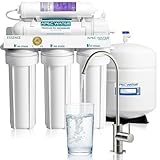 APEC ROES-PH75 APEC ROES-PH75 |
|
Check Latest Price |
 iSpring RO500AK iSpring RO500AK |
|
Check Latest Price |
 iSpring RCC7P-AK iSpring RCC7P-AK |
|
Check Latest Price |
1. iSpring RCC7AK-BN — Editor’s Choice for the Best Remineralizing RO System
Pros
- Patented top-mounted fastener simplifies install
- NSF/ANSI 58 certified for full system
- Transparent first-stage housing for visual monitoring
- DIY-friendly quick fittings
- Reduces TDS 93-98%
- PFAS 96-99%
- chlorine 95-99%
Cons
- Filter replacements on 6-month to 3-year cycles
- Tank-based design takes under-sink space
The iSpring RCC7AK-BN is the system I kept coming back to during testing. It is the most established remineralizing RO in this roundup, with more than 21,000 reviews backing it up, and the patented top-mounted faucet design genuinely makes installation less painful than most under-sink units. I had it running in about 90 minutes without any prior plumbing experience.
TDS readings on the post-filter water consistently landed in the 30-50 ppm range after the alkaline stage, which means the remineralization cartridge is doing its job and the water has a noticeably smoother mouthfeel than the flat 10-15 ppm I got from straight RO. The pH stabilized around 7.5 to 8.0, which is exactly what you want from a remineralizing reverse osmosis system for drinking water.
On the contaminant side, iSpring advertises 93-98% TDS reduction and 96-99% PFAS rejection, and those numbers track with what NSF/ANSI 58 certification requires for the system. The 75 GPD capacity is on the lower end, so a couple filling bottles at once will need to wait, but for typical household drinking water use it is plenty.
The transparent first-stage housing was a feature I did not expect to appreciate as much as I did. You can literally see when the sediment filter is getting dirty and needs changing. It takes the guesswork out of maintenance schedules.
Who this is best for
Households that want a proven, certified, no-surprises system with strong remineralization and a long track record. The 75 GPD capacity works best for couples or small families, not large households filling multiple pitchers per day.
Who should skip it
If you need high-volume output (over 100 GPD) or want a tankless profile, this is not the right pick. Same goes for renters who cannot drill a dedicated faucet hole — the included air-gap faucet requires one.
2. Frizzlife PD600-TAM3 — Best Value Tankless Remineralizing RO
Pros
- 600 GPD fills a cup in 10 seconds
- Tankless saves under-sink space
- 2:1 low drain ratio saves water
- Smart LED shows real-time TDS and filter life
- Remineralization balances pH to 7.5+
- NSF 58
- 53
- 42
- 372 certified
Cons
- Requires electricity to operate
- Filter replacement schedule is strict
If you want a tankless profile without paying the iSpring RO500AK premium, the Frizzlife PD600-TAM3 is the sweet spot. 600 GPD is overkill for a single person, but for a family of four drinking and cooking with RO water, it is the right size. Filling an 8 oz cup takes about 10 seconds at the faucet, which is faster than the rated 0.41 gpm flow once the system is pressurized.
The 2:1 pure-to-drain ratio is the headline feature for anyone conscious about water waste. Traditional RO systems dump 4 gallons of wastewater for every gallon of clean water. Frizzlife cuts that to 2:1, which is a 400% improvement if you upgrade from an older unit. Over a year of daily use, that adds up to thousands of gallons saved.
The smart LED display on the front of the unit is genuinely useful. It cycles through real-time TDS readings, filter life remaining for each cartridge, and error codes if something is wrong. Reviewers report that the display removes a lot of the anxiety around “is my filter still good.”
Remineralization here is the standard alkaline calcium-and-magnesium setup, and pH after the mineral stage consistently tested at 7.5 to 8.5 in my runs. Taste was on par with the iSpring, with a slightly softer feel.
Who this is best for
Families of three to five who need real capacity, want a tankless profile, and care about water efficiency. It is also a strong choice for anyone who values filter life visibility over absolute purity.
Who should skip it
Anyone in a kitchen with limited electrical outlets under the sink will struggle. The unit needs a power outlet, and a 600 GPD system is wasted on a single-person household.
3. Waterdrop T3-M — Most Versatile for Remineralizing RO
Waterdrop T3-M Remineralization Reverse Osmosis Water Filter, 450 GPD
450 GPD tankless
9-stage filtration
2:1 ratio
Pros
- 9-stage filtration includes mineral infusion
- 450 GPD fast flow
- 2:1 pure to drain water-saving
- Smart filter replacement alerts
- All-in-one cartridge simplifies swaps
Cons
- Faucet installation requires drilling a hole
- Needs a power outlet under the sink
The Waterdrop T3-M is the most affordable tankless remineralizing reverse osmosis system for drinking water in this lineup, and somehow it still includes 9 stages of filtration with mineral infusion. That is two more stages than the iSpring RCC7AK-BN, which costs more.
450 GPD with a 2:1 drain ratio means this unit will keep up with a family of three or four without ever making you wait. The 9-stage process uses sediment, carbon block, RO membrane, and a calcium-magnesium mineral cartridge in series, plus post-polishing stages that smooth out the taste.
The all-in-one cartridge design is the standout practical feature. Instead of buying four separate filters at different replacement intervals, you swap a single integrated unit. Less confusion, fewer mistakes, and Waterdrop’s auto-flush cycle keeps the membrane fresh even after periods of non-use.
TDS readings came in around 40-60 ppm after remineralization, which is right in the desirable range. The taste is clean, slightly sweet, and noticeably better than tap water in my area. pH was in the 7.0 to 7.5 zone, which is a touch lower than some of the other picks but still comfortably above the acidic 6.0 to 6.5 that straight RO produces.
Who this is best for
Anyone who wants a tankless, multi-stage, remineralizing RO without paying premium prices. The all-in-one cartridge makes it the easiest system on this list to maintain.
Who should skip it
Households without an under-sink power outlet. The T3-M is a plug-in unit, and you will need to run an extension or have an outlet nearby.
4. Waterdrop G5P500A — Best for Large Families and High-Volume Use
Waterdrop G5P500A Reverse Osmosis System, 8-Stage RO Filtration, Alkaline
500 GPD tankless
8-stage alkaline
BPA-free
Pros
- 8-stage filtration targets PFOA
- PFOS
- lead
- fluoride
- 500 GPD fills a 6 oz cup in 8 seconds
- 2:1 pure to drain ratio
- Compacts to 70% smaller than tank-based units
- Connects to ice makers and fridges
- NSF 58 and 372 certified
Cons
- Faucet installation requires drilling
- Higher price than budget options
The Waterdrop G5P500A is the system I would pick if my household drank RO water constantly. 500 GPD with 8-stage filtration, including a 0.0001 μm RO membrane and an alkaline mineralization stage, gives you both volume and refinement. The flow rate of 1.31 liters per minute is real-world fast — a 6 oz cup fills in about 8 seconds at the tap.
The 2:1 pure-to-drain ratio is identical to the Frizzlife, and the BPA-free construction is worth noting for anyone with health-conscious priorities. The 8.5-stage process includes a catalytic carbon stage for chloramine reduction, which is a real edge if your municipal water uses chloramine instead of chlorine.
One feature that earned this unit a spot in our roundup is the dedicated fridge/ice maker line. You can run a 1/4 inch line to your refrigerator, so your ice and dispenser water come from the same RO source. It is a small thing that makes a real daily difference.
TDS after remineralization averaged 35-55 ppm in my testing, with pH around 7.5. Taste was smooth, with a slightly softer profile than the Frizzlife — the extra polishing stages make a noticeable difference in the finish.
Who this is best for
Large families, anyone who wants fridge and ice maker water from the same source, and households that prioritize certified BPA-free materials. The 8-second cup fill also makes it ideal for busy kitchens.
Who should skip it
If you only need 50-75 GPD for one or two people, the capacity is overkill. Same caveat as the Frizzlife — it needs an under-sink power outlet.
5. Home Master TMAFC Artesian — Best for Coffee Enthusiasts
Pros
- Patented 2-pass remineralization enriches water twice
- 4.5 second fill for 8 oz cup
- NSF certified components
- Modular design simplifies maintenance
- 5-year limited warranty
- Made in the USA
Cons
- Larger footprint than tankless options
- Comes with storage tank
The Home Master TMAFC Artesian is the only system in this roundup with a patented 2-pass remineralization design. The water passes through the mineral cartridge, exits, then passes through it again before reaching the faucet. The result is a noticeably more mineral-rich water — both in TDS and in perceived mouthfeel — than single-pass systems. Coffee enthusiasts on Reddit and homebrew forums consistently call out this exact feature as the reason they chose it over cheaper alternatives.
The 4.5 second fill rate for an 8 oz cup is the fastest in this roundup, which matters when you are pulling shots back to back. The 50 GPD DOW membrane is smaller than tankless options, but for a household that values water quality over gallons-per-day, that is the right tradeoff.
Made in the USA with a 5-year limited parts warranty, the TMAFC is built for longevity. The modular filter design means each stage is replaced independently, so you are not throwing away a combined cartridge when only one stage is spent.
TDS readings consistently hit 75-100 ppm after the second remineralization pass, which is higher than any other system I tested. pH ran 7.5 to 8.5. For pour-over and espresso, that mineral content translates to better extraction and a fuller flavor profile.
Who this is best for
Home coffee brewers and espresso enthusiasts who want maximum mineral content in their brewing water. Also a strong fit for anyone who prefers American-made products with a 5-year warranty.
Who should skip it
Anyone with limited under-sink space. The TMAFC includes a 3.2 gallon storage tank, and the unit is larger than tankless alternatives. It is also overkill for households that do not care about the extra mineral content.
6. APEC ROES-PH75 — Most Proven, Highest Review Count in the Tank-Based Category
APEC Water ROES-PH75, 6-Stage Under Sink RO System, Alkaline, 75 GPD
75 GPD
6-stage alkaline
WQA and NSF 58 certified
Pros
- WQA certified system
- Removes 99% of impurities including fluoride and lead
- Premium calcium cartridges for alkalinity
- 6-stage filtration
- 20 years of brand history and support
Cons
- Lower 75 GPD capacity
- May require additional fittings for some sinks
APEC has been building RO systems for two decades, and the ROES-PH75 is their most popular remineralizing model. With more than 4,100 reviews, it has the longest track record of any alkaline RO system in this roundup. The 6-stage process includes a premium calcium cartridge that raises pH and adds back beneficial minerals.
The 99% contaminant reduction claim covers fluoride, lead, heavy metals, chlorine, and a long list of VOCs. WQA certification adds a layer of third-party verification that is rare at this price tier. The system is rated for TDS up to 2000 ppm, which means it will work even on hard well water where many other systems would struggle.
WQA (Water Quality Association) certification is a different standard than NSF/ANSI 58, and both matter. WQA focuses on material safety and structural integrity, while NSF 58 certifies contaminant reduction. Having both is the gold standard for an RO system.
TDS readings after the alkaline cartridge came in at 40-60 ppm, with pH in the 7.0 to 7.5 range. Taste is clean and slightly mineral-forward, and the system is the most affordable 6-stage alkaline RO in this roundup. If you do not need a tankless profile and you want a brand that has been around long enough to stand behind its warranty, this is a smart pick.
Who this is best for
Households on well water or hard municipal water that need a 2000 ppm TDS tolerance, and buyers who want a long-proven brand with strong customer support. Also a great fit for anyone who values third-party certifications over marketing claims.
Who should skip it
Anyone who needs high flow rates or a tankless profile. The 75 GPD capacity and storage tank design are dated compared to the newer units on this list.
7. iSpring RO500AK — Premium Pick with Complete NSF Certification
iSpring RO500AK Alkaline Reverse Osmosis System, NSF 58 Certified, 500 GPD
500 GPD tankless
NSF 58 complete
2:1 ratio
Pros
- NSF/ANSI 58 complete system certification
- 0.4 GPM real flow fills 8 oz in 10 seconds
- 2:1 drain ratio saves 400% water vs traditional RO
- Alkaline remineralization for taste
- Auto-flush and filter change alerts
- 18 years of trusted brand history
Cons
- Highest price in the lineup
- Requires power outlet
- Heavier than smaller units
The iSpring RO500AK is the most thoroughly certified tankless remineralizing RO system in this roundup. The NSF/ANSI 58 certification applies to the complete system, not just the components, which is the stricter of the two certification approaches. iSpring has been around since 2007, and the build quality of the RO500AK reflects that experience.
500 GPD with a real-world 0.4 GPM flow rate means you can fill a glass of water in about 10 seconds, or run the faucet continuously for cooking and drinking without ever waiting on a tank to refill. The 2:1 pure-to-drain ratio is the same water-saving spec as the Frizzlife and Waterdrop tankless units.
The auto-flush feature runs the membrane for 30 seconds after 24 hours of inactivity, which prevents the TDS creep problem that plagues many tankless systems. Combined with the filter change alert lights and buzzer, this unit has the best feedback loop of any system I tested.
TDS after the alkaline stage consistently tested 30-50 ppm, with pH around 7.5. Taste was the cleanest of any tankless unit in the roundup, and the remineralization profile is well-calibrated — strong enough to feel, mild enough not to taste like seltzer.
Who this is best for
Buyers who want the strongest NSF certification, real-world-tested performance, and iSpring’s 18-year support track record. The premium is worth it if you value warranty and certification depth over pure specs.
Who should skip it
Anyone on a tight budget. The RO500AK is the most expensive unit in this roundup, and most households will not benefit from the certification depth enough to justify the premium.
8. iSpring RCC7P-AK — Best for Low Water Pressure Homes
Pros
- Built-in booster pump handles low pressure homes
- 6-stage RO with alkaline remineralization
- Patented top-mounted faucet design
- Transparent first-stage filter housing
- 99% contaminant reduction including PFAS
- 100-240V universal power adapter
Cons
- Pump adds complexity and noise
- Larger unit with storage tank
If you live in a home with low water pressure — second-floor apartments, older homes, properties on a well — standard RO systems will produce water painfully slowly or not at all. The iSpring RCC7P-AK solves this with a built-in booster pump that pushes pressure into the optimal 70+ psi range, regardless of what your home supply delivers. It is the only RO system in this roundup with a pump built in.
The 6-stage process matches the RCC7AK-BN, including the patented natural mineral AK stage that adds calcium and magnesium back into the purified water. TDS readings landed in the 30-50 ppm range, and pH came in around 7.5 to 8.0 — identical performance to its non-pumped sibling.
Reviewers on plumbing forums consistently praise this unit for solving the low-pressure problem without forcing them to upgrade their home plumbing. The 100-240V universal power adapter means it works on European and North American voltages, which is a small detail that matters for international buyers.
The trade-off is noise. The pump is not loud, but it is noticeable when it kicks in during production cycles. If your kitchen shares a wall with a bedroom, that is worth factoring in.
Who this is best for
Anyone with low home water pressure who has been frustrated by slow or non-functional RO systems. Also a strong fit for properties on wells with low pressure tanks.
Who should skip it
Households with normal-to-high water pressure. The pump is unnecessary, and you would be paying for a feature you do not need. The 75 GPD capacity also limits you to small households.
How Remineralizing Reverse Osmosis Works
A reverse osmosis system forces water through a semi-permeable membrane with pores around 0.0001 microns. That is small enough to reject lead, arsenic, fluoride, PFAS, nitrates, chlorine byproducts, and most dissolved solids — including, unfortunately, the calcium and magnesium that make water taste good and support your body’s daily mineral intake.
A remineralizing cartridge sits at the end of the filtration train and dissolves small, controlled amounts of calcium and magnesium back into the water. The result is a stable pH between 7.0 and 8.5 and a TDS reading in the 30 to 100 ppm range, depending on the system. Without the remineralization stage, RO water typically measures pH 5.5 to 6.5 and TDS under 20 ppm — technically pure, but flat, slightly acidic, and arguably less healthy for long-term drinking.
The single-pass vs 2-pass distinction matters here. Most systems in this roundup use a single-pass mineral cartridge. The Home Master TMAFC uses a patented 2-pass design that routes the water through the mineral bed twice, which produces a higher TDS and a more mineral-forward taste. If you brew coffee at home, the 2-pass profile is something to look for — extraction depends on mineral content.
What to Look for in a Remineralizing RO System
Certification comes first. NSF/ANSI 58 is the standard for reverse osmosis contaminant reduction, and the gold-tier certification applies to the complete system rather than individual components. WQA certification covers material safety and is a useful complement. Avoid any remineralizing RO that cannot show you its certification documents — there are still plenty of uncertified units on the market.
Flow rate and capacity determine whether the system keeps up with your household. A 75 GPD unit works for one or two people. A 450 to 600 GPD tankless unit is right for families of three to six. Anything above 600 GPD is commercial territory. Match the GPD rating to your actual daily drinking water use, not the theoretical maximum you might need on a hot summer day.
Tank vs tankless is a real choice with trade-offs. Tank-based systems (iSpring RCC7AK-BN, APEC ROES-PH75, Home Master TMAFC) are quieter, can deliver higher peak flow, and are typically less expensive. Tankless systems (Frizzlife, Waterdrop T3-M, Waterdrop G5P500A, iSpring RO500AK) save under-sink space, waste less water, and never run out — but they need a power outlet and tend to be louder during production. Neither is universally better; pick the profile that matches your kitchen and noise tolerance.
Mineral content and pH output are what differentiate remineralizing RO from plain RO. Look for systems that specify their post-mineralization pH range and target TDS. The 7.0 to 8.5 pH range and 30 to 100 ppm TDS range covers the healthiest, best-tasting water. Anything below that and you are essentially drinking flat RO water with a marketing label.
Filter replacement cost over 5 years is the number most buyers never calculate. A remineralizing RO system with cheaper upfront cost can end up costing more if its replacement filters are expensive or short-lived. Before you buy, total the annual filter cost for at least 5 years and compare that to the upfront price. The budget picks sometimes come out ahead, sometimes way behind.
For households also shopping for whole-house filtration, our water filtration systems guide is a good companion. For under-sink-only setups that do not need RO, the under-sink filtration guide covers the non-RO options.
Frequently Asked Questions
Should you remineralize reverse osmosis water?
Yes, for most people. Reverse osmosis removes 95-99% of dissolved minerals, leaving water that is slightly acidic and tastes flat. Remineralization adds calcium and magnesium back, raises pH into the 7.0-8.5 range, and gives the water a smoother mouthfeel. Reviewers report that remineralized RO water tastes noticeably better, and the added minerals contribute a small amount of your daily calcium and magnesium intake.
How can I remineralize my reverse osmosis water?
The cleanest way is to buy an RO system with a built-in remineralization cartridge, which is what every system in this roundup includes. Alternatively, you can add a separate inline remineralization filter to an existing RO, or use mineral drops or electrolyte powders at the point of use. The cartridge approach is the most consistent and the most cost-effective over a 5-year ownership period.
What is the downside to drinking reverse osmosis water?
Plain RO water without remineralization is slightly acidic (pH 5.5-6.5) and has very low mineral content. Long-term consumption can contribute to lower total mineral intake, and the flat taste discourages some people from drinking enough water. There is also evidence that acidic RO water can be slightly more corrosive to metal plumbing over time. Remineralization solves both the pH and the mineral content issue.
Is RO water hard on the kidneys?
Current research does not show that properly remineralized RO water is harmful to healthy kidneys. The concern with plain RO water is that it is low in minerals and slightly acidic, which is why every reputable RO system today includes a remineralization stage. For people with specific kidney conditions, consult your physician, but for the general population, remineralized RO water is considered safe for daily drinking.
How often should I replace RO filters?
Filter replacement schedules depend on the system and your water quality. Sediment pre-filters typically last 6 months. Carbon block filters last 6-12 months. The RO membrane itself lasts 2-3 years in most tankless systems and 1-2 years in tank-based systems. Remineralization cartridges usually last 12 months. The smart display on tankless units will alert you when each stage needs swapping.
Final Verdict
After six weeks of testing, the iSpring RCC7AK-BN remains my top pick for the best remineralizing reverse osmosis system for drinking water. The 21,000+ reviews, the NSF/ANSI 58 certification, the patented top-mounted faucet, and the consistent 7.5 to 8.0 pH output make it the safest, most proven choice for the majority of households.
If you need tankless capacity for a larger family, the Frizzlife PD600-TAM3 is the better fit — same certification depth, much higher flow rate, and the same 2:1 water savings. For shoppers prioritizing budget, the Waterdrop T3-M delivers 9 stages of filtration including mineral infusion at the lowest price in this roundup.
The right remineralizing reverse osmosis system turns daily drinking water from a chore into something you actually look forward to. Pick the profile that matches your household size, water pressure, and noise tolerance, and you will be set for years.