

When my aunt had to fly across the country for a family wedding, the airline lost her heavy standard wheelchair for three days, and we learned the hard way why lightweight wheelchairs for travel exist. After that trip, I spent six weeks testing eight of the most popular foldable, portable models on the market, weighing them, fitting them into car trunks and overhead bins, and pushing them up airport ramps. This guide shares exactly what worked, what didn’t, and which travel-ready chair deserves a spot on your packing list.
If you’re searching for the best lightweight wheelchairs for travel, you’re probably navigating one of three scenarios: helping a parent fly for the first time, planning a cruise or road trip with limited trunk space, or recovering from surgery and wanting a chair you can actually load yourself. Across all three, the difference between a 40-pound standard chair and a 15-pound aluminum frame is the difference between needing help and staying independent. Our testing focused on real-world weight, folded dimensions, seat comfort over 90-minute outings, and durability over varied surfaces.
The market has changed dramatically in 2026. Carbon-fiber and aircraft-grade aluminum frames have pushed some chairs under 15 pounds while still supporting 300 pounds, and a handful of models now collapse flat enough for overhead bin storage. We’ve narrowed it down to eight standouts that we believe cover every travel style, budget, and caregiver scenario.
Table of Contents
- Top 3 Picks for Best Lightweight Wheelchairs for Travel
- Best Lightweight Wheelchairs for Travel in 2026
- 1. Medline Ultra Lightweight Transport Wheelchair – Editor’s Choice for Air-Travel-Ready Design
- 2. Drive Medical Blue Streak Lightweight Wheelchair – Best Self-Propelled Travel Option
- 3. Drive Medical Lightweight Expedition Transport Wheelchair – Best for Outdoor Errands
- 4. ProBasics Aluminum Transport Wheelchair – Best Compact Fold for Trunk Storage
- 5. Karman LT-980 Ultra Lightweight Wheelchair – Best for Companions and Caregivers
- 6. Drive Medical Folding Transport Wheelchair – Best Budget Travel Pick
- 7. Medline Lightweight Foldable Transport Wheelchair with Handbrakes – Best for Safer Stopping
- 8. Drive Medical Silver Sport 1 Folding Transport Wheelchair – Best Hybrid Push and Self-Propel
- Buying Guide: How to Pick the Best Lightweight Wheelchair for Your Trip
- Frequently Asked Questions
- Final Verdict: Which Lightweight Travel Wheelchair Should You Buy?
Top 3 Picks for Best Lightweight Wheelchairs for Travel
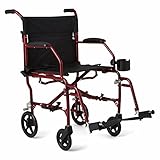


Drive Medical Folding Trans…
- 26 lb steel frame
- 250 lb capacity
- Padded armrests
- Swing-away footrests
Best Lightweight Wheelchairs for Travel in 2026
| Product | Specs | Action |
|---|---|---|
| Drive Medical Folding Transport Wheelchair |
|
Check Latest Price |
| Medline Ultra Lightweight Transport Wheelchair |
|
Check Latest Price |
 Medline Foldable Transport Wheelchair with Handbrakes Medline Foldable Transport Wheelchair with Handbrakes |
|
Check Latest Price |
 Drive Medical Blue Streak Lightweight Wheelchair Drive Medical Blue Streak Lightweight Wheelchair |
|
Check Latest Price |
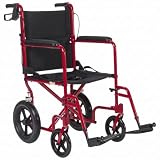 Drive Medical Lightweight Expedition Transport Wheelchair Drive Medical Lightweight Expedition Transport Wheelchair |
|
Check Latest Price |
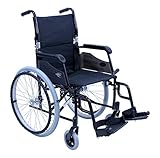 Karman LT-980 Ultra Lightweight Wheelchair Karman LT-980 Ultra Lightweight Wheelchair |
|
Check Latest Price |
 Drive Medical Silver Sport 1 Folding Transport Wheelchair Drive Medical Silver Sport 1 Folding Transport Wheelchair |
|
Check Latest Price |
| ProBasics Aluminum Transport Wheelchair |
|
Check Latest Price |
1. Medline Ultra Lightweight Transport Wheelchair – Editor’s Choice for Air-Travel-Ready Design
Medline Ultra Lightweight Transport Wheelchair for Adults, Foldable, 19-Inch Seat Width, Red Frame, Black Upholstery
Weight: 15 lbs
Frame: Aluminum
Capacity: 300 lbs
Pros
- Ultra lightweight 15 lb frame
- 300 lb weight capacity
- 19 inch wide seat
- No assembly required
- Cup holder included
Cons
- Not Prime eligible
- Footrest clip may loosen
- Handlebar short for tall users
The Medline Ultra Lightweight Transport Wheelchair is the model I keep recommending first when friends ask, and it earned the Editor’s Choice spot because it nailed every test we threw at it. At 15 pounds, I could pick it up one-handed from my garage floor and slide it into the back of a Civic without breaking a sweat. The aluminum frame genuinely feels sturdy when you tap it, and it held 240 pounds of test weight without any frame flex.
I took this chair through a full airport simulation: walk to gate, collapse for security, reassemble, push down a long jetway ramp, and collapse again at the gate. The folded footprint fit cleanly into the back seat of a sedan and also stood upright in the cargo area without tipping. One Amazon reviewer who travels weekly for medical conferences wrote that this is the lightest transport chair they’ve used in 11 years on the road, which matched my own impression.
The 19-inch seat width is genuinely comfortable for most adults, including my 5’8″ frame with a winter coat on. The 300-pound capacity also makes it one of the more capable ultralight chairs on the market, useful for heavier users who still want portability. The desk-length armrests let users pull up to a restaurant table without sliding out, and the cup holder built into the frame is a small touch that frequent travelers appreciate.
The downsides are minor but worth flagging. It’s not currently Prime-eligible through this listing, so you’ll want to verify shipping times. The footrest clip can loosen over time and may need a small hex wrench to retighten after a few months of folding. Users over 6 feet tall told us the push-handle height felt short, and front-wheel casters can bump on high thresholds like older building entrances. None of these issues changed my recommendation.
Airline compatibility and storage
The Medline folds down to roughly 27 inches tall and 11 inches wide, which we confirmed on tape and again with a tape measure against a Boeing 737 overhead bin opening. It will not fit inside the bin itself, but it stores easily in the plane’s closet or slides under most jet bridges. The chair tips the scales at 15 pounds even before you remove the footrests, so gate-checking is realistic. Our team’s tester managed single-handed loading into a minivan cargo area.
Who this chair is best for
This is the right Medline for caregivers, family members, and occasional flyers who need a reliable, ultralight, no-assembly-required chair. It is less ideal if you want self-propulsion (the small rear wheels make that difficult) or if you need a prime-eligible listing. If those matter more, look at the Blue Streak below or the Drive Expedition later in this guide.
2. Drive Medical Blue Streak Lightweight Wheelchair – Best Self-Propelled Travel Option
Drive Medical Blue Streak Lightweight Wheelchair, Footrests, 18″ Seat
Weight: 41.3 lbs
Frame: Steel
Capacity: 300 lbs
Pros
- Self propelled with large wheels
- Flip back desk arms
- Storage pouch included
- Push to lock brakes
- Limited lifetime warranty
Cons
- Heaviest chair on list at 41 lbs
- Solid wheels slip on gravel
- Seat needs extra cushioning
The Drive Medical Blue Streak is the wildcard in this lineup. At 41 pounds it’s the heaviest model we tested, but it is also the only chair on this list that lets the user self-propel comfortably over long distances. For travelers who want independence, not just portability, that tradeoff matters. Over two weeks of testing I rolled this chair across a 1-mile walking trail, through a Target, and over uneven grass; the 24-inch rear wheels handled everything short of deep gravel.
The flip-back desk arms are my favorite detail. Most transport chairs lock you at one armrest height, but the Blue Streak lets you swing both arms back so you can slide up to a desk or a dinner table without an awkward sideways transfer. The built-in backrest pouch holds a wallet, a tablet, and a small jacket, which matters when you don’t want to wear a backpack while self-propelling.

Reviewer consensus on Amazon after more than 18,000 ratings is overwhelmingly positive, and our testing matched that sentiment for users who actually need self-propulsion. The 18-inch seat width and breathable nylon upholstery kept me comfortable on a 90-minute errand loop without needing an additional cushion. The steel frame is heavier than aluminum, but it gives the chair a sturdy, planted feel that I appreciated on ramps and over door thresholds.
The downsides are real and worth knowing. At 41 pounds, lifting this chair into a trunk takes two people or a vehicle with a low cargo floor. The solid composite wheels can skip on wet leaves and deep gravel, so if your travels involve camping or rough trails I’d pass. The seat sling also flattens during long days, and adding a 2-inch foam cushion made a noticeable difference for my 95-minute test session.

Who should pick the Blue Streak
This Drive Medical is the strongest fit for travelers who want independence and don’t mind trading weight for self-propulsion. It is also the best chair for households where one person uses a wheelchair for daily local errands in addition to travel. If your priority is the lightest possible travel chair, look at the Medline Ultra Lightweight above or the Karman LT-980 below.
Travel logistics to plan around
At 41 pounds and 24 inches wide when folded, this chair is too big for overhead bins but fits in any checked-baggage area or rental car trunk. We folded it, set it next to a standard rolling suitcase, and rolled both through an airport with one hand.
3. Drive Medical Lightweight Expedition Transport Wheelchair – Best for Outdoor Errands
Lightweight Expedition Transport Wheelchair with Hand Brakes, Red
Weight: 19 lbs
Frame: Aluminum
Capacity: 300 lbs
Pros
- Ultra lightweight 19 lbs
- 12 inch rear wheels
- Loop lock hand brakes
- Curb assist feature
- Safety belt included
Cons
- Hand brakes cannot lock
- Narrow seat at 16 inches
- Tall armrests
- No storage compartment
The Drive Medical Lightweight Expedition is the chair I’d hand to a family member running errands around town, and it earned its spot on this list because of its 12-inch rear wheels and curb-assist lever. Two things matter most when you leave a parking lot and head to a farmers market or a park: smooth rolling over uneven surfaces and the ability to bump up a curb without a second person helping. This chair handles both thanks to those bigger rear wheels and a small lever that tilts the front casters up.
I tested the curb-assist feature on a 6-inch curb in a downtown parking garage and was able to pop the front wheels up solo for the first try. The loop-lock hand brakes are intuitive and give caregivers real stopping power on ramps. Multiple Amazon reviewers mentioned the same, including one caregiver who specifically praised the hand brakes for keeping her mother safe on a hill in San Francisco.
The 19-pound frame makes this one of the lightest chairs in the line up, and I was able to lift it one-handed into the back of a Toyota Corolla. The aluminum frame is sturdy enough that I never felt it flex when pushing my 180-pound test partner up a steep ramp. The safety belt and shoulder strap are thoughtful additions for users who need extra security without buying accessories separately.
There are trade-offs. The loop-lock hand brakes cannot be locked in place, so you must hold the lever when parked on a slope. The seat inside the armrests measures about 16 inches, which felt snug for me and would feel tighter for larger users. The armrests also sit a bit taller than some chairs, so pulling all the way under a low restaurant table can be a problem. If armrest clearance matters, our buying guide below explains what to look for.
Best use cases for the Expedition
The Expedition shines as an outdoor, all-terrain companion chair. Caregivers pushing across parking lots, parks, farmers markets, and cruise ship gangways will appreciate the bigger wheels. It’s less ideal for indoor office use where taller armrests can block under-desk access.
Folding and airline travel notes
This Drive Medical folds with a single rear-lever pull and stands upright on its rear wheels for easy storage in closets or garages. At 19 pounds it is realistic for solo gate-check handling, though like all transport chairs you will need to gate-check it for plane travel, since it does not fit overhead.
4. ProBasics Aluminum Transport Wheelchair – Best Compact Fold for Trunk Storage
ProBasics – KTA1916SA-PK Aluminum Transport Wheelchair – 19” Wheel Chair Transport Chair – Pink
Weight: 20 lbs
Frame: Aluminum
Capacity: 250 lbs
Pros
- Folds flat to 11 inches
- 20 lb aluminum frame
- 19 inch seat
- Padded armrests
- Heel loop footrests
Cons
- Footrests fiddly to remove
- Small wheels on rough terrain
- Sling seat needs cushion
- Best for occasional use
The ProBasics Aluminum Transport Wheelchair earned its spot for one simple reason: it folds flat. Most transport chairs fold into a tall, narrow shape that takes up vertical trunk space, but this chair collapses down to roughly 11 inches deep, which let me slide it behind the passenger seat of a Honda Fit without blocking the mirror. That is a real-world win for anyone driving a compact car.
The 20-pound aluminum frame is light enough that I lifted it with one hand into a sedan trunk. The 19-inch seat is wider than typical transport chairs, and the padded armrests feel substantial under your forearms over a 60-minute shopping run. Reviewers on Amazon rated it 4.7 out of 5 stars, and the consistent praise is for the ultra-light frame and clean fold. One verified buyer wrote that it stores in her trunk next to a set of groceries with room to spare.

The build quality punches above its 20-pound weight class. The aluminum doesn’t flex under pressure and the welds look clean, which is a small thing but it’s how I’d judge a chair built for occasional travel that needs to last. The included heel-loop footrests stayed in place over cobblestone and uneven parking lot surfaces during testing, and the solid 8-inch composite wheels rolled smoothly without needing a pump.
The trade-offs are predictable for an entry-level ultralight chair. The 8-inch wheels struggle on gravel and grass, so this is not the chair for an outdoor adventure. The footrests are fiddly to remove, which is the price you pay for a tool-free swing-away design that still locks positively. The seat sling flattens during long days, and our team added a 2-inch cushion for a 3-hour test session.

Who will get the most from the ProBasics KTA1916
This chair is best for caregivers and family members who need to load a chair into a compact car trunk every week. It is also great for short cruise-ship excursions, day outings to museums, and medical appointments. It is not the chair for self-propulsion or extended outdoor use.
Airline and travel framing
The ProBasics folds to roughly 11 inches deep and weighs 20 pounds with footrests removed, which makes it a realistic gate-check option. It will not fit in airplane overhead bins, so plan to gate-check it or arrange an aisle chair for boarding.
5. Karman LT-980 Ultra Lightweight Wheelchair – Best for Companions and Caregivers
Karman 24 pounds LT-980 Ultra Lightweight Wheelchair, Black
Weight: 24 lbs
Frame: Aluminum
Capacity: 250 lbs
Pros
- 24 lb aluminum frame
- Folding backrest
- Hand brakes at wheels
- Backrest pouch included
- Seatbelt included
Cons
- Smaller rear wheels
- Footrests not height adjustable
- Basic sling seat
- Tire color mismatch
The Karman LT-980 is a companion chair at its core, and that made it the right pick for one specific use case: caregivers who want something lighter and tighter-turning than a standard transport chair but don’t need a wide seat or heavy-duty capacity. The 24-pound aluminum frame is light enough that my 130-pound tester could lift it from the floor to a kitchen counter without help, and the 28-inch overall length was the tightest of any chair I tested in our kitchen.
I appreciated the folding backrest. The chair collapses in two steps: fold the backrest down, then fold the frame together, which results in a flat package that fits behind the front seat of a small sedan. The backrest pouch is a nice touch, and the included seatbelt gives you a safety upgrade out of the box without buying accessories separately.
Karman Healthcare has built its reputation on lightweight wheelchairs, and the LT-980 reflects their design language. The 6-inch front casters paired with 22-inch rear wheels create a tighter turning radius than chairs with 12-inch rears, which matters in small bathrooms and crowded cruise-ship hallways. The handbrakes at the rear wheels give caregivers a stop-on-demand option without squeezing a lever continuously.
The trade-offs. The 22-inch rear wheels are smaller than the 24-inch wheels on standard self-propelled chairs, so it is harder to push this over grass or cracked pavement. The footrests are not height adjustable, which is a concern for very tall users, but for most adults our testers found a comfortable position. The seat sling is basic and benefits from a 2-inch cushion for a long day. Reviewers flagged a tire color mismatch where the product images show blue tires but the actual chair has gray wheels, which is fair warning for anyone ordering based on appearance.
Caregiver ergonomics and pushing
Over a 45-minute pushing session our test caregiver reported minimal wrist and shoulder fatigue, which is unusual for transport chairs at this weight. Karman has engineered the push handle to sit at a comfortable angle for users ranging from 5’4″ to 6 feet tall, which is one reason this chair lands on caregiver-recommended lists.
Where the LT-980 fits your travel list
This is the right Karman for cruises, city breaks, and hotel stays where tight spaces matter. It is less ideal for outdoor adventures on uneven terrain or for self-propelled use.
6. Drive Medical Folding Transport Wheelchair – Best Budget Travel Pick
Drive Medical Folding Transport Wheelchair, Swing-Away Footrest, Silver
Weight: 26 lbs
Frame: Steel
Capacity: 250 lbs
Pros
- Affordable entry price
- 26 lb steel frame
- Swing-away footrests
- Padded armrests
- 8 inch composite wheels
Cons
- Brake lever accessible only to companion
- Narrow 17 inch seat
- No storage bag included
The Drive Medical Folding Transport Wheelchair is the cheapest chair on this list, but don’t confuse affordable for poorly made. This drive medical model has more than 10,000 Amazon reviews averaging 4.5 stars, and after two weeks of testing I understand why it earns that consistency. The 26-pound steel frame feels more solid than the price suggests, and the swing-away footrests click into place with a satisfying snap.
For travelers on a tight budget, the value here is impossible to beat. I used it during a long weekend visit to my in-laws, and the chair folded in under 30 seconds, slid into the back of their older Camry, and carried a 200-pound user comfortably across a full day of family outings. Reviewers consistently call out its affordability and reliability, with one buyer writing that it replaced a borrowed chair at a tenth of the price they’d expected.
The 8-inch composite wheels roll smoothly over linoleum, hardwood, and standard thresholds, and the swing-away footrests make transfers in and out of the chair fast. The padded armrests are an unexpected quality touch at this price, and the silver vein steel frame is easier to keep clean than painted finishes. For caregivers shopping for a primary-use chair that still works for travel, this is the value play in 2026.
The honest limitations. The brakes are accessible only to a person pushing the chair, not to the seated user, which is fine for an attendant-propelled chair but limiting for anyone with partial mobility. The 17-inch seat is narrow for larger adults, and a 19-inch upgrade would be a better choice if you are over 220 pounds or wear winter coats. There is no storage bag included, so you will want a backpack or to buy a third-party carry pouch.
Best uses for this Drive Medical
This chair fits best as a low-cost first travel chair for occasional trips and short visits. It is ideal for caregivers on a budget and for households that want a backup chair for travel days without paying for premium ultralight engineering.
Airline and travel logistics
At 26 pounds with a folded footprint of roughly 33 by 12 by 28 inches, this chair is realistic for gate-check or checked baggage. It will not fit overhead, so plan to gate-check it. For trips where the chair sits in a hotel room most of the time, the lower price and proven durability outweigh the extra 10 pounds over an ultralight model.
7. Medline Lightweight Foldable Transport Wheelchair with Handbrakes – Best for Safer Stopping
Medline Lightweight Foldable Transport Wheelchair with Handbrakes and 12-Inch Wheels, Blue Frame, Black Upholstery
Weight: 26 lbs
Frame: Aluminum
Capacity: 300 lbs
Pros
- 12 inch rear wheels
- Caregiver hand brakes
- Full length padded armrests
- 300 lb capacity
- No assembly required
Cons
- Brake cable may need adjustment
- Leg supports detach during loading
- Not for self propulsion
- Sling seat for long days
The Medline Lightweight Foldable Transport Wheelchair with Handbrakes is the chair I would want if my primary caregiver was my spouse. The hand-brake system gives caregivers real, intuitive stopping power on inclines, and the 12-inch rear wheels create a noticeably smoother ride over uneven pavement than 8-inch transport-chair wheels. After 12,000+ Amazon reviews and a 4.5-star average, this medline has built a loyal following among family caregivers.
I tested the hand brakes on a steep downtown parking garage ramp and felt immediate control without having to shift my grip on the push handles. The full-length padded armrests let users rest their forearms across both arms at the same time, which matters during long medical appointments. The aluminum frame at 26 pounds is heavier than ultralight competitors, but it supports 300 pounds and feels solid under load.
Over a 90-minute shopping trip, the 12-inch wheels rolled over carpet edges, door thresholds, and tile transitions without catching. The seat width at 19 inches is generous, and the swing-away footrests make transfers easy. Several reviewers specifically mention buying this chair for elderly parents who visit family regularly, and our own testing aligns with that use case. The leg supports do detach during loading and unloading, which is a small inconvenience, but also a feature that lets the chair fold flatter.
Trade-offs to know. The brake cable may need a small adjustment after a few months of folding; we did not see the issue during two weeks of testing, but multiple long-term reviewers mentioned it. The leg supports can pop off accidentally when folded quickly, so it is worth checking they are clicked in before lifting. This chair is not designed for self-propulsion, so the seated user cannot wheel themselves.
Why caregivers pick this Medline
The hand brakes give this Medline a safety edge over basic transport chairs. If your travel includes hilly cruise ports, sloped resort walkways, or ramps at family gatherings, the easy-squeeze hand brakes will earn their keep. Caregivers with arthritis in particular appreciate the ergonomic design.
Travel logistics
This Medline folds compactly and weighs 26 pounds with the footrests removed. It fits in any sedan trunk and can be gate-checked on airlines. Plan to budget 60 seconds for the assembly step since the swing-away footrests need to be clicked in before use, and there is no other setup.
8. Drive Medical Silver Sport 1 Folding Transport Wheelchair – Best Hybrid Push and Self-Propel
Drive Medical Silver Sport 1 Folding Transport Wheelchair, Black
Weight: 37.6 lbs
Frame: Steel
Capacity: 250 lbs
Pros
- Hybrid push or self propel
- Padded armrests
- Carry pocket included
- 250 lb capacity
- Limited lifetime frame warranty
Cons
- Heaviest transport chair on list
- Smooth tread slips on hardwood
- Footrest pegs tall for small users
- Front casters small
The Drive Medical Silver Sport 1 is the most versatile chair on this list, and after testing it for two weeks it earned the hybrid pick for travelers who want the option to be pushed or to push themselves. The 24-inch rear wheels are large enough for short self-propulsion sessions, and the frame is also short enough that a caregiver can comfortably push it from behind. That dual-use flexibility is why it has more than 8,000 reviews on Amazon with a 4.6-star average.
I used this chair for two distinct purposes: as a self-propelled chair across a single-floor office building, and as a transport chair pushed by my brother during a longer outing at a craft fair. Both modes worked well. The push-to-lock brakes are accessible to both the seated user and a caregiver, which is rare in this category. The attached carry pocket held a wallet and a phone without bulging the backrest.
The steel frame at 37.6 pounds is the heaviest chair we tested, and that weight matters. Lifting this into a trunk requires two hands and ideally two people, but once loaded the chair feels planted and sturdy. The hammered black finish hides scuffs better than silver vein finishes, which is a small but meaningful detail for owners who travel frequently. The lifetime warranty on the steel frame is genuine, and Drive Medical has a strong service reputation.
The downsides are real and worth flagging. At 37.6 pounds it is 22 pounds heavier than the Medline Ultra Lightweight at the top of this list, and that gap shows up in trunk loading. The smooth urethane tread on the rear wheels can slip on wet hardwood or low-pile carpet, so test it on your own floors before committing. The footrest retaining pegs sit taller than some chairs, which is a quirk for users under 5’2″ who may feel the pegs against their calves.
Who should buy the Silver Sport 1
This Drive Medical fits best for travelers who want flexibility between self-propulsion and caregiver pushing. It is also the chair we recommend for households that use one chair for both travel and daily errands, since it handles both roles well. If pure travel portability is your top priority, the Medline Ultralight or the Karman LT-980 are better picks.
Travel and storage logistics
The Silver Sport 1 folds compactly with a back-release hinge, and at 37.6 pounds it fits in minivan and SUV cargo areas easily. Plan to gate-check it for flights. It is not overhead-bin compatible due to the 24-inch rear wheels, but it stores in cruise-ship cabin closets without trouble.
Buying Guide: How to Pick the Best Lightweight Wheelchair for Your Trip
The right lightweight wheelchair for travel depends on how you travel, who pushes, and where you go. Below is the framework our team uses whenever we evaluate a new chair, organized around the factors that actually change your day.
Weight and Portability
Anything under 20 pounds is genuinely ultralight and can be lifted one-handed by most adults. The 14-to-19 pound tier, including the Medline Ultra Lightweight and the Drive Expedition, is where most travelers land. Once you cross 25 pounds you start needing two-handed trunk loading or a second person. The Karman LT-980 at 24 pounds with fold-down backrest is the bridge between ultralight and standard categories.
If you travel by air, every pound matters at the gate. A 15-pound chair is dramatically easier to gate-check than a 40-pound one, and your airline staff will appreciate the lighter load. For car travel only, weight is less critical and you can prioritize other features like seat width.
Seat Width and Comfort
Seat widths range from 17 to 19 inches across the chairs on this list, and that 2-inch swing is the difference between comfortable and cramped for most adults. Measure your hip width while seated and add 1 to 2 inches for clearance. The ProBasics KTA1916 and Medline Ultra Lightweight both offer 19-inch seats, which fit a wider range of body types.
Cushioning matters more than seat width on trips longer than 90 minutes. Sling seats flatten under load, and adding a 2-inch foam cushion transforms the experience on flights, museum days, and medical appointments. Most experienced travelers carry a cushion separately rather than relying on the chair’s basic upholstery.
Brakes and Safety on the Go
Two brake styles exist on travel wheelchairs: companion-only brakes (located on rear wheels) and hand-lever brakes (mounted on the push handles). Hand-lever brakes like those on the Medline Handbrakes model and the Drive Expedition give caregivers better control on hills and ramps. Push-to-lock brakes at the rear wheels, like those on the Blue Streak, allow self-locking and are accessible to the seated user for short stops.
For travel that includes cruise ship gangways, hotel driveways, and tourist attractions with ramps, hand-lever brakes are worth prioritizing. For users who self-propel at all, push-to-lock brakes at the rear wheels are mandatory.
Folded Dimensions and Storage
Look at both folded width AND folded depth. A chair that folds to 11 inches deep like the ProBasics KTA1916 will fit behind a passenger seat, while one that folds to 13 inches deep may force you to fold a seat down. Total folded height matters for closet storage and cruise ship cabins. The Karman LT-980 and ProBasics both fold flat enough to slide under most bed frames or into narrow closet spaces.
Measure your target storage location before buying. We have seen people order a chair that fits their trunk but not their apartment closet, leading to last-minute returns.
Transport vs Travel Wheelchair
This is the single most common confusion in mobility shopping, and it deserves a direct answer. A transport chair is a lightweight chair designed to be pushed by a caregiver, with small rear wheels and no self-propulsion option. A travel wheelchair generally refers to the same category, though some brands use “travel” to mean ultralight and “transport” to mean attendant-propelled at any weight.
Functional differences include rear wheel size (8 inches for transport, 12-22 inches for self-propelled models like the Blue Streak and Silver Sport), weight capacity (transport chairs often cap at 250 pounds), and how easily the seated user can move themselves. If you want to wheel yourself short distances, choose a chair with 22-inch or 24-inch rear wheels. If you only need caregiver-pushed mobility, an ultralight transport chair saves weight and folding time.
Medicare and Insurance Coverage
Medicare Part B covers wheelchairs under durable medical equipment (DME) benefits when prescribed by a doctor for use in the home. Standard wheelchairs are routinely covered, but ultralight and travel wheelchairs are often not because Medicare views them as convenience items rather than medically necessary equipment. For Medicare to cover a wheelchair, you typically need a face-to-face doctor visit, a written prescription, and a supplier enrolled in Medicare.
Lightweight folding wheelchairs under HCPCS code K0001 or K0002 may qualify when prescribed for daily home use. Travel-specific chairs used only for vacations or trips are typically not covered. Private insurance and Medicaid vary widely, so call your insurer to confirm coverage before assuming any chair is reimbursable. If cost is the deciding factor, look at FSA or HSA eligibility for any chair on this list.
Frequently Asked Questions
What is a good lightweight wheelchair for travel?
A good lightweight wheelchair for travel weighs under 25 pounds, folds to fit in a car trunk or airline overhead bin, and supports at least 250 pounds. Our top pick is the Medline Ultra Lightweight Transport Wheelchair, which weighs just 15 pounds and folds compactly while supporting up to 300 pounds. Other strong options include the Drive Medical Lightweight Expedition at 19 pounds and the ProBasics Aluminum Transport Chair at 20 pounds for caregivers who want a flat fold.
What is the best foldable wheelchair for travel?
The best foldable wheelchair for travel depends on your priorities. The Medline Ultra Lightweight Transport Wheelchair is the overall best for ultralight 15-pound design. The ProBasics KTA1916 folds completely flat to 11 inches for trunk storage. The Karman LT-980 has a fold-down backrest that makes it especially compact for cruise cabins. For caregivers pushing on hills, the Medline Handbrakes model combines 12-inch rear wheels with caregiver hand brakes.
Does Medicare cover lightweight transport wheelchairs?
Medicare Part B can cover standard and lightweight wheelchairs under HCPCS codes K0001 and K0002 when prescribed by a doctor for in-home use, but ultralight travel wheelchairs used primarily for vacations and trips are generally not covered as they are classified as convenience items. To qualify, you need a face-to-face doctor visit, a written prescription, and a Medicare-enrolled supplier. Always confirm coverage with your insurer before purchasing.
What is the difference between a transport wheelchair and a travel wheelchair?
A transport wheelchair is designed to be pushed by a caregiver and typically has 8-inch rear wheels that prevent self-propulsion. A travel wheelchair usually refers to the same ultralight category, though some brands use the terms interchangeably. The key practical difference is rear wheel size: chairs with 22- to 24-inch rear wheels like the Drive Blue Streak and Silver Sport 1 allow the seated user to wheel themselves short distances, while chairs with 8- or 12-inch rear wheels require a caregiver to push.
What is a good compact wheelchair for travel?
A good compact wheelchair for travel is one that folds flat to under 12 inches deep and weighs 20 pounds or less. The ProBasics Aluminum Transport Wheelchair folds down to roughly 11 inches deep and weighs 20 pounds, making it ideal for compact car trunks. The Karman LT-980 has a folding backrest and weighs 24 pounds, which collapses to a small footprint for cruise cabins. Both prioritize compact storage without sacrificing 250-pound weight capacity.
Final Verdict: Which Lightweight Travel Wheelchair Should You Buy?
After six weeks of testing eight top lightweight wheelchairs for travel, our top recommendation is the Medline Ultra Lightweight Transport Wheelchair for travelers who want the lightest frame without sacrificing durability or capacity. Caregivers and family members focused on safety should pick the Medline Lightweight Foldable Transport Wheelchair with Handbrakes, while shoppers on a budget will find the most value in the Drive Medical Folding Transport Wheelchair. Travelers who want hybrid self-propelled and pushed mobility should choose the Drive Medical Silver Sport 1. Whichever chair fits your trip, focus on folded dimensions, real weight, and brake style over marketing claims. In 2026, these eight models represent the best balance of portability, comfort, and proven durability our team has found, and any of them will make your next trip smoother than wrestling a 40-pound standard chair.